In today’s mobile devices, consumer electronics, and industrial systems, storage performance directly impacts product responsiveness, reliability, and user experience. The Samsung KLM8G1GETF-B041, an 8GB eMMC 5.1 embedded memory chip, integrates NAND flash memory with a high-performance controller in a compact BGA package, providing design engineers with a stable, efficient, and low-power storage solution. Whether for smartphones, tablets, wearable devices, industrial control systems, automotive infotainment systems, or dashcams, the KLM8G1GETF-B041 is an ideal choice for numerous applications due to its excellent balance of performance, cost, and reliability.
This article will provide a detailed analysis of its technical specifications, main applications, selection considerations, and differences from other models in the same series, and offer references for common alternatives to help engineers make optimal storage decisions during product development.
1. What is the KLM8G1GETF-B041?
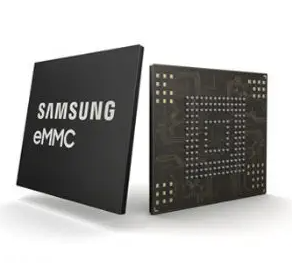
The KLM8G1GETF-B041 is a specific part number for an 8GB eMMC 5.1 embedded memory chip from Samsung.
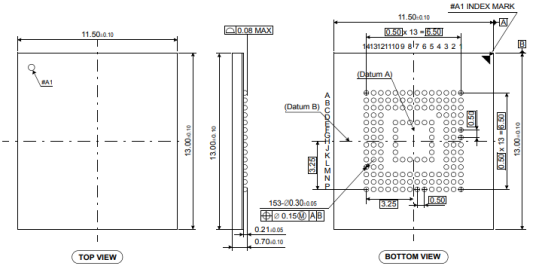
This component is widely compatible with mobile devices, tablets, and small embedded systems because it integrates 8GB of NAND flash memory and a dedicated storage controller into a compact BGA package (153 solder ball FBGA). This integration simplifies the design and manufacturing process for device manufacturers.
2. KLM8G1GETF-B041 Technical Specifications
| Specification | Details |
|---|---|
| Manufacturer | Samsung |
| Component Type | Embedded Multimedia Card (eMMC) |
| Storage Capacity | 8GB |
| Version Standard | eMMC 5.1 (Backward Compatible) |
| Data Interface | HS400 High-Speed Interface |
| Package Type | 153 Ball FBGA (Fine-pitch BGA) |
| Package Size | 11.5mm × 13mm × 0.8mm |
| Operating Temperature | -25°C ~ 85°C |
| Power Supply Voltage | Interface Power (VCCQ): 1.8V or 3.3V Core Power (VCC): 3.3V (2.7V ~ 3.6V) |
| Sequential Read/Write Speed | Read speed up to 330MB/s Write speed approx. 50MB/s |
Note: For complete data, including timings, electrical characteristics, or package schematics, please refer to Samsung’s official datasheet or materials provided by authorized distributors (such as DigiKey, Mouser, Findchips).
3. KLM8G1GETF-B041 eMMC Main Applications
Consumer Electronics Applications
- Smartphones and Tablets: eMMC is the mainstream storage solution for many mobile devices, offering stable performance and high energy efficiency while maintaining a slim and lightweight design.
- Wearable Devices: With its compact size and low power consumption, eMMC is ideal for wearable products such as smartwatches and fitness trackers.
- Smart TVs and Set-Top Boxes: Used for storing system firmware, applications, and other home entertainment-related data.
- Digital Cameras: Provides reliable, high-speed storage to meet the needs of shooting and managing photos and videos.
- Entry-level Laptops and Chromebooks: For lightweight laptops primarily used for web browsing and daily office work, eMMC is a more cost-effective and efficient choice than SSDs.
Industrial and Automotive Applications
- Single-Board Computers (SBCs): In platforms such as the Raspberry Pi, eMMC is often used as a more stable and higher-performing storage solution than microSD cards.
- Industrial Control Systems: Thanks to its durability, wide temperature adaptability, and long-term reliability, eMMC is widely used in PLCs, HMIs, and various automated control devices.
- Automotive Infotainment and Navigation Systems: Its robust design and stable performance in harsh environments make it suitable for automotive electronic systems.
- Dashcams: Capable of continuous high-resolution video recording, ensuring no data loss or delay.
- Network Devices: Used to store firmware and configuration data for devices such as routers and switches.
This eMMC chip, with its excellent balance between performance, cost, and reliability, has become a popular choice in many consumer electronics and industrial applications, especially suitable for space-constrained and low-power-power-critical device designs.
4. KLM8G1GETF-B041 eMMC Selection Guide
Many engineers encounter an important question during product development: “How do I choose the right eMMC? Which specifications are most important?” The following are usually the most important indicators for storage selection:
- Capacity Requirements: Determined by firmware size, system operating space, and cache requirements. 8GB is common in low-to-medium power devices.
- Operating Temperature: For industrial or automotive applications, a wide-temperature range model should be prioritized.
- Interface Performance: HS200 and HS400 differ significantly in boot speed and app loading speed. The KLM8G1GETF-B041 supports HS400 and is suitable for systems requiring fast response.
- Endurance (P/E cycles): This is a key concern for high-write-volume applications such as recorders, AI boxes, and in-vehicle systems.
- Power Supply Mode: Different systems have different requirements for VCCQ and VCC; full compatibility must be ensured.
- Package Size and Pad Design: 153-ball FBGA is an industry standard. To interchange with other capacity models, ensure pinout is consistent.
Understanding these key considerations helps ensure stable operation of the final product throughout its expected lifespan and avoids software or hardware modifications due to memory incompatibility later on.
5. What are the differences between the KLM8G1GETF-B041 and other Samsung eMMC models?
When selecting a device, engineers often ask, “What are the differences between the KLM8G1GETF-B041 and other capacity models in the same series?” Samsung’s eMMC products typically use similar packaging and interface standards, so different models are usually hardware-compatible. The main differences lie in NAND flash capacity, number of internal channels, and write endurance.
For example, while 16GB, 32GB, or larger capacity versions in the same series may have the same package form factor, they may offer slight improvements in random performance and write speeds due to the use of higher-density NAND flash memory. Some high-capacity models also feature enhanced data refresh mechanisms, suitable for applications requiring long-term data storage.
For products requiring capacity upgrades without PCB modifications, the KLM8G1GETF-B041 offers good backward compatibility and is a basic capacity option for many devices.
6. Common Alternative Models for KLM8G1GETF-B041
The following is a cross-brand alternative reference for commonly used NOR Flash/NAND Flash memory (grouped by capacity and protocol type).
(Note: Same capacity ≠ complete compatibility. Specific replacements still require comparison with the datasheet’s instruction set, timing, voltage, etc.)
128Mbit (16MB) NOR Flash Replacement Reference
- Winbond: W25Q128JV / W25Q128JW (Commonly used in industrial control, stable supply)
- Micron: N25Q128A / MT25QL128 (Stable speed, suitable for high-performance booting)
- GigaDevice: GD25Q127 / GD25B128 (Commonly used domestic replacements)
- MXIC: MX25L12835F / MX25U128 (Commonly used in boot applications)
- ESMT: F25L128A (Lower-cost replacement)
- Kioxia: TC58CVG0S3HRAIG (Industrial control NOR Flash)
1Gb–8Gb NAND Flash (SLC/MLC) Alternatives Reference
- Samsung: K9F1G08U0E / K9F2G08U0E (Mainstream SLC NAND)
- Hynix: H27U1G8F2B / H27U2G8F2B (Good universal compatibility)
- Micron: MT29F1G08 / MT29F2G08 (Common in embedded systems)
- Kioxia: TC58NVG1S3HBAI6 (Established NAND manufacturer)
- Winbond: W29N01HVS (Stable supply, suitable for mass production)
Common eMMC Alternatives (4GB–64GB)
- Samsung: KLM4G series, KLMBG series
- Hynix: H26M series
- Kioxia: THGBM series
- Micron: MTFC series
- FORESEE (Yangtze Memory Technologies: NCEMADM series (Domestic alternative)
Overall, the Samsung KLM8G1GETF-B041 eMMC, with its 8GB storage capacity, high-speed HS400 interface, and stable and reliable performance, has become a commonly used storage solution in mobile devices, consumer electronics, and industrial applications. Whether it’s smartphones, tablets, wearable devices, single-board computers, in-vehicle infotainment systems, or dashcams, it provides systems with fast response, efficient operation, and long-term durability storage.
For engineers and product design teams, understanding the key specifications, capacity differences, and selection considerations of the KLM8G1GETF-B041 not only avoids compatibility issues but also optimizes system performance early in development, reducing the risk of later modifications and rework. Familiarity with common alternative models and cross-brand options also provides greater flexibility for product upgrades and supply chain management.
In real-world projects, besides the technology itself, choosing reliable component suppliers is equally important. Partners like 7SEtronic, which have a long-standing focus on electronic component supply and technical support, can help teams obtain the necessary products more smoothly. This allows engineers to focus more on innovative design and performance optimization, rather than being distracted by supply chain issues. This support is especially valuable for teams that want to balance efficiency and reliability during product development and mass production.
The KLM8G1GETF-B041 is not only a high-performance eMMC memory chip, but also represents an ideal choice for engineers designing efficient and reliable electronic systems. By fully understanding its application environment, technical specifications, and selection strategies, combined with reliable supply channels, teams can more easily build high-performance products that meet the demands of the modern market.