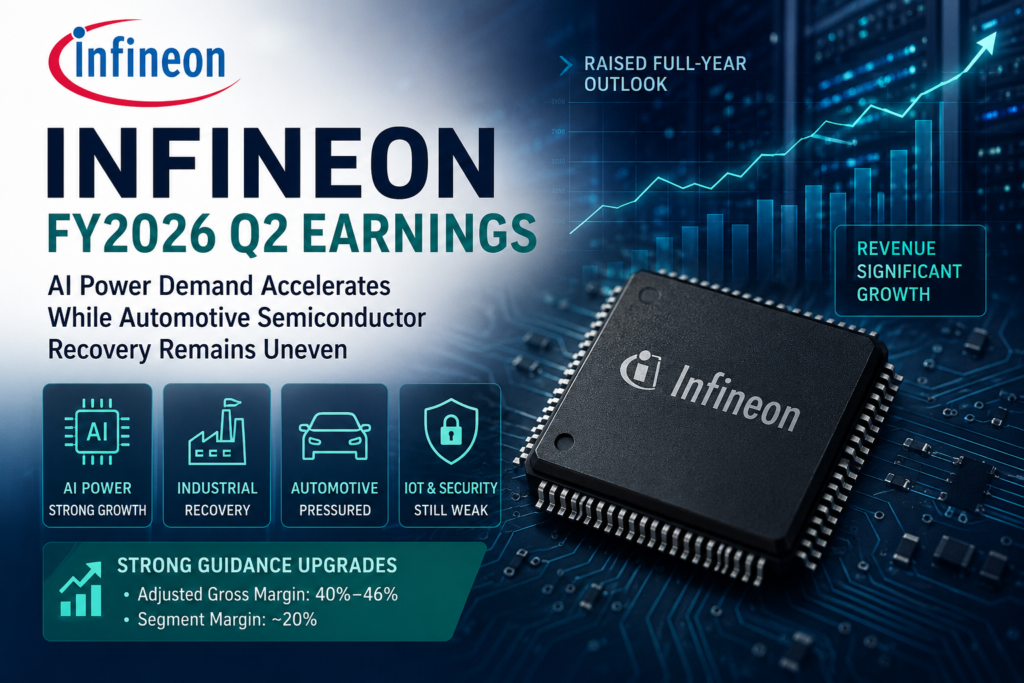
On May 6, Infineon FY2026 Q2 Earnings Report released its fiscal 2026 second-quarter results (ended March 31, 2026) and raised its full-year guidance. The latest Infineon earnings report quickly became one of the most discussed topics in the semiconductor industry, mainly because it clearly reflects where real demand recovery is happening in 2026.
According to the Infineon earnings report, AI infrastructure, industrial power systems, and radar sensing applications are now driving the company’s growth, while parts of the automotive semiconductor market, especially EV high-voltage applications, remain under pressure.
For OEMs, EMS companies, distributors, and procurement teams, this Infineon earnings report provides an important reference for understanding semiconductor demand trends, inventory recovery, and future sourcing risks across automotive, industrial, and AI-related applications.
The semiconductor market spent the last two years arguing about whether recovery had started. The answer now appears to be: “Yes, but only if your chips are connected to AI servers consuming terrifying amounts of electricity.” A very modern economic model.
Infineon Earnings Report Shows Strong Growth in AI and Industrial Segments
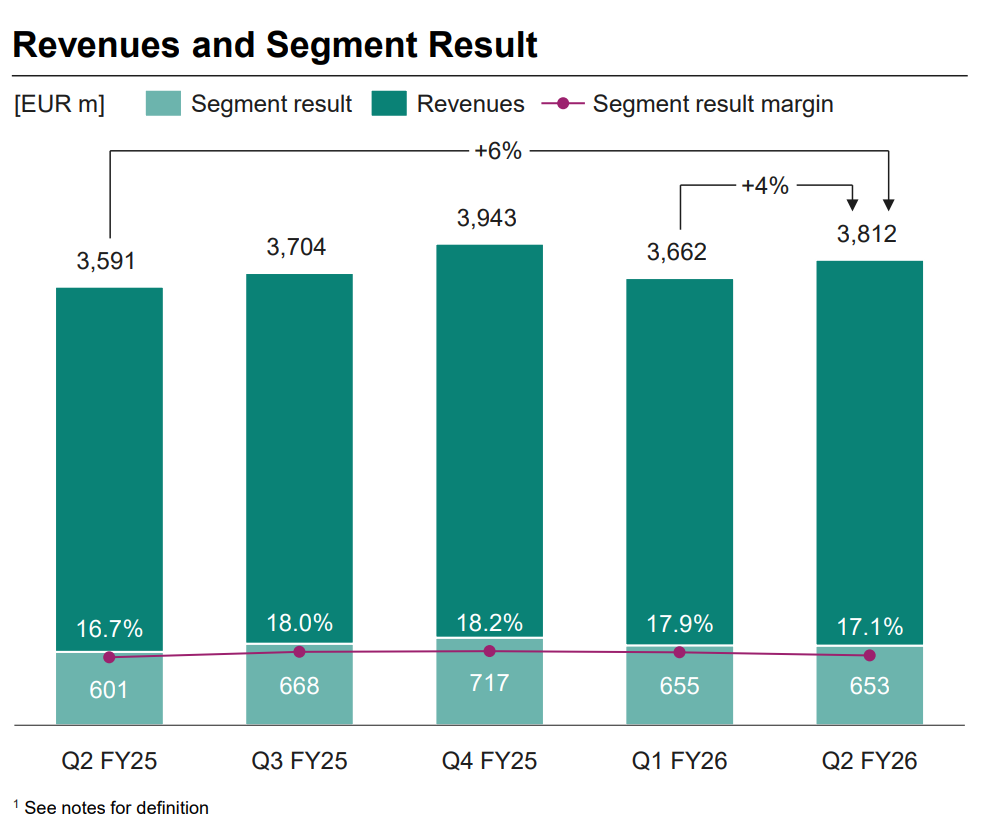
According to the latest Infineon earnings report, the company generated €3.812 billion in Q2 FY2026 revenue, up 6% year-over-year and 4% quarter-over-quarter. Segment profit reached €653 million, while segment margin improved to 17.1%.
The Infineon earnings report also confirmed that the company raised its full-year outlook:
- Revenue is now expected to grow significantly
- Adjusted gross margin guidance increased to 40%–46%
- Full-year segment margin is expected to reach around 20%
However, the Infineon earnings report also showed that recovery remains highly uneven across different business divisions.
| Business Segment | Q2 Revenue | YoY | QoQ | Key Drivers | Market Situation |
|---|---|---|---|---|---|
| PSS (Power & Sensor Systems) | €1.26B | +26% | +8% | AI power supply, radar sensors | Strongest growth engine |
| GIP (Green Industrial Power) | €403M | +7% | +15% | Grid infrastructure, HVAC | Industrial recovery improving |
| ATV (Automotive) | €1.83B | -2% | Flat | Weak EV high-voltage demand | Orders improving slowly |
| CSS (Connected Secure Systems) | €319M | -10% | -1% | Weak identification business | Still under pressure |
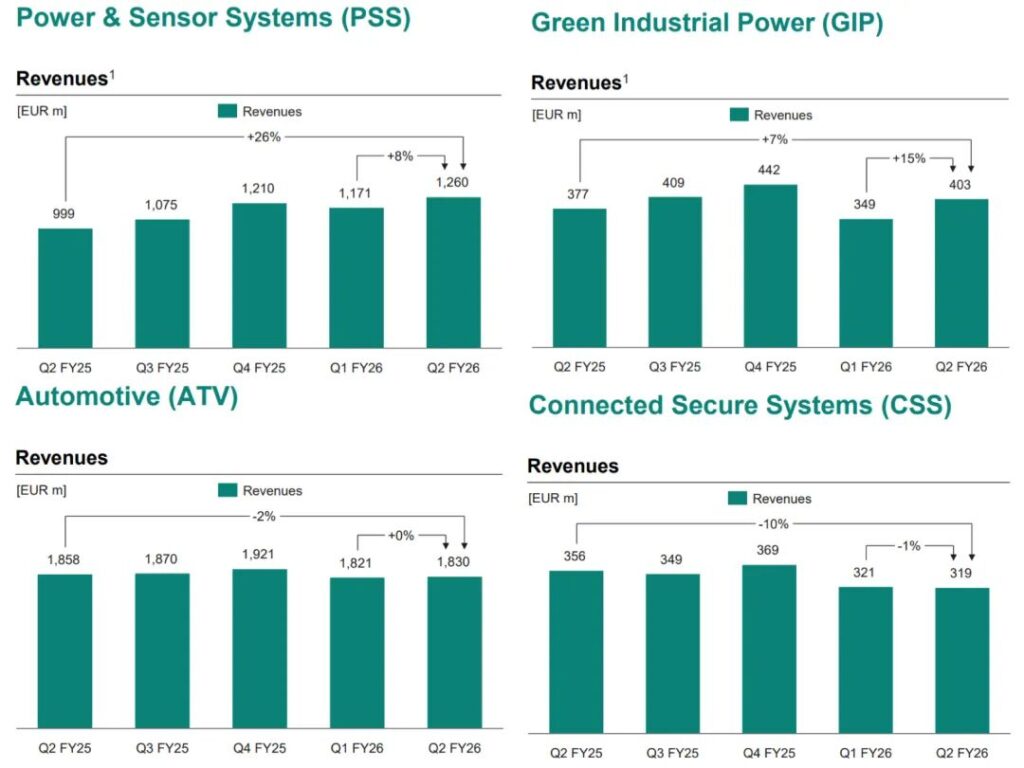
This section of the Infineon earnings report highlights a key market reality in 2026: semiconductor demand recovery is no longer happening evenly across all sectors. Instead, growth is now concentrated in AI infrastructure, industrial power, and selected sensing technologies.
AI Power Became the Biggest Highlight in the Infineon Earnings Report
The strongest business inside the Infineon earnings report was clearly the PSS (Power & Sensor Systems) division.
Revenue from the segment increased 26% year-over-year, while segment margin improved from 17.4% to 20.4%.
Infineon stated in the earnings report that AI power solutions and radar sensor products were the main growth drivers.
This matters because AI infrastructure expansion creates demand far beyond GPUs alone. AI servers and data centers also require:
- Power semiconductors
- PMICs
- MOSFETs
- Power management systems
- Thermal management solutions
- High-efficiency power architectures
The Infineon earnings report further revealed that the company expects AI-related revenue to reach approximately €1.5 billion in FY2026 and around €2.5 billion in FY2027.
For the broader semiconductor supply chain, this means sourcing pressure may increasingly shift toward AI-related power devices and industrial semiconductors over the next several quarters.
At 7SEtronic, we continue helping global OEM and EMS customers source power semiconductors, sensors, industrial ICs, and hard-to-find electronic components for automotive, AI server, and industrial infrastructure projects. As the Infineon earnings report shows, flexibility in component sourcing is becoming increasingly important as demand patterns continue shifting.
Infineon Earnings Report Indicates Industrial Market Recovery
Another important signal from the Infineon earnings report came from the GIP (Green Industrial Power) business.
The segment delivered:
- 7% year-over-year growth
- 15% quarter-over-quarter growth
- Margin improvement from 8.9% to 11.7%
According to the Infineon earnings report, demand recovery came mainly from:
- Power infrastructure
- HVAC systems
- Home appliances
- Grid modernization projects
Infineon also emphasized that AI data center expansion is becoming a long-term growth driver for industrial power applications.
This part of the Infineon earnings report is particularly important because industrial semiconductor demand had remained weak for several consecutive quarters due to inventory correction and cautious capital spending.
Now, the market is finally beginning to show signs of stabilization.
Automotive Business Still Faces Pressure
The Infineon earnings report also confirmed that automotive semiconductor recovery remains uneven.
ATV (Automotive) revenue declined 2% year-over-year, while segment margin dropped from 22.1% to 18.1%.
Infineon explained in the earnings report that weakness mainly came from EV high-voltage power semiconductor products and pricing pressure across the automotive market.
However, the Infineon earnings report also noted improving automotive order intake.
At the same time, semiconductor content per vehicle continues increasing due to:
- Software-defined vehicles (SDV)
- Vehicle electrification
- Advanced sensing systems
- Driver assistance technologies
The automotive market is no longer growing at the explosive pace expected several years ago, but semiconductor demand inside vehicles continues rising structurally.
In other words, the car industry finally remembered profitability matters. Investors everywhere briefly fainted.
Inventory Conditions Are Improving
The Infineon earnings report also showed improving inventory conditions.
Inventory days (DIO) declined from 183 days to 175 days during the quarter, indicating that excess inventory pressure is gradually easing.
For procurement teams, distributors, and OEM buyers, inventory normalization is one of the most important indicators affecting:
- Pricing trends
- Lead times
- Supply availability
- Allocation risks
As highlighted throughout the Infineon earnings report, the semiconductor market is moving away from broad market shortages toward application-specific supply dynamics.
Some categories are already recovering quickly, while others remain weak.
Infineon Expands Sensor Business Through Acquisition
Another major development in the Infineon earnings report was the company’s acquisition strategy.
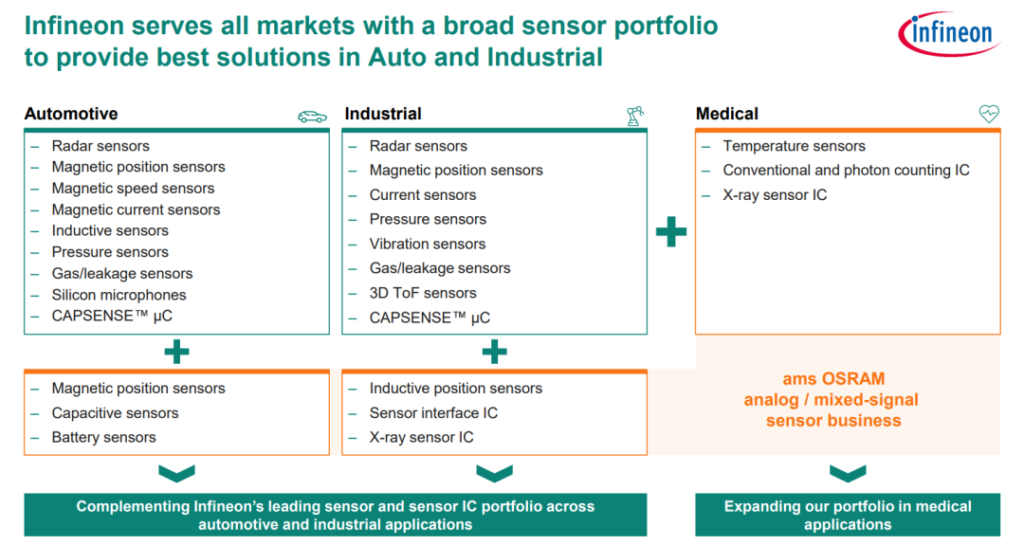
Earlier this year, Infineon announced a €570 million acquisition of the non-optical analog and mixed-signal sensor business from ams OSRAM Sensor Business Acquisition.
The acquired business is expected to contribute approximately €230 million in annual revenue.
According to the Infineon earnings report, the acquisition strengthens Infineon in:
- Medical imaging
- X-ray systems
- Sensor interfaces
- Position sensing
- Temperature sensing
Applications include robotics, automotive chassis systems, steering wheel detection, and healthcare monitoring.
This part of the Infineon earnings report further demonstrates how semiconductor companies are increasingly focusing on complete system-level solutions rather than standalone chip products.
Infineon Restructures Business Divisions
The Infineon earnings report also announced a major organizational restructuring.
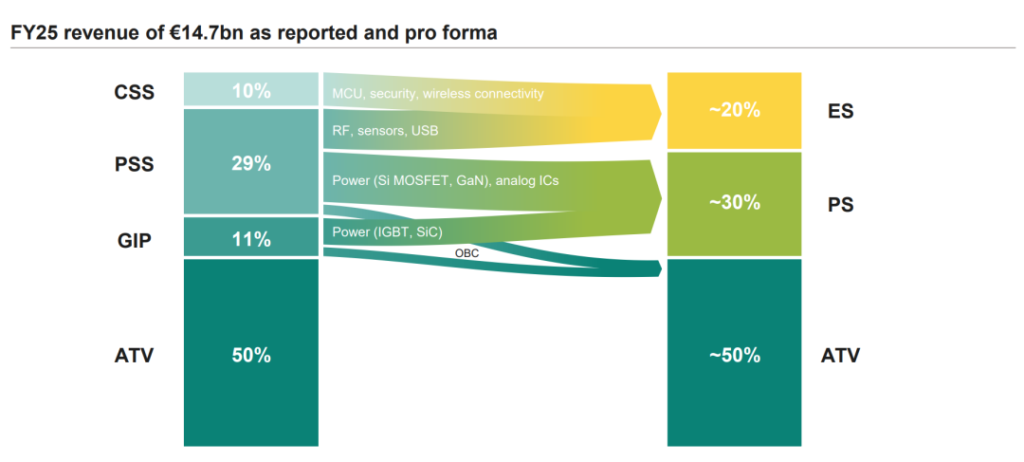
Starting from FY2026 Q4, Infineon will reorganize its four divisions into three groups:
- ATV (Automotive)
- PS (Power Systems)
- ES (Edge Systems)
The new structure aims to simplify internal decision-making and improve alignment with AI, industrial power, and edge computing applications.
According to the Infineon earnings report, the new PS division will focus heavily on AI data center power systems, industrial power, grid infrastructure, and communications power applications.
Meanwhile, the ES division will focus on edge AI, robotics, automation, connectivity, and sensing technologies.
The semiconductor industry reorganizes itself every few years around whichever buzzword currently terrifies competitors the most. This time, it’s AI plus power infrastructure. Conveniently expensive combination.
Conclusion
This Infineon earnings report provides one of the clearest snapshots yet of the current semiconductor market cycle.
AI power solutions and radar sensors are growing rapidly. Industrial power demand is recovering. Automotive semiconductor demand is stabilizing, although EV high-voltage applications remain under pressure. IoT and secure system markets are still recovering slowly.
Most importantly, the Infineon earnings report confirms that semiconductor recovery in 2026 is highly application-driven rather than broad-based.
For OEMs, EMS providers, and procurement teams, sourcing flexibility and supply chain visibility are becoming increasingly critical as pricing, lead times, and demand conditions diverge across different semiconductor categories.
At 7SEtronic, we continue supporting global customers with sourcing solutions for automotive semiconductors, industrial ICs, power devices, sensors, and hard-to-find electronic components, helping customers respond more efficiently to changing market conditions highlighted throughout the latest Infineon earnings report.
FAQ
Why is AI business growing so quickly for Infineon?
AI data centers require large amounts of power semiconductors and sensing technologies, driving rapid demand growth.
Which segment performed best in the Infineon earnings report?
PSS (Power & Sensor Systems) delivered the strongest growth due to AI power and radar sensor demand.
Why did Infineon reorganize its business structure?
The restructuring aligns resources more closely with AI, power infrastructure, and edge computing applications.