In our previous article, “Can we buy old Date Code chips?”, we analyzed the solderability, mechanical reliability, and electrical performance of components stored for up to 17 years. We concluded with empirical findings demonstrating that, for semiconductor products stored under appropriate conditions, no issues or failures were detected. In this installment, we will examine the evolving landscape of semiconductor traceability and analyze the new standards and practices aimed at enhancing supply chain resilience.
For decades, the semiconductor industry has treated Date Code as one of the key indicators of component reliability. Many OEMs, EMS providers, and purchasing teams still require semiconductors with recent manufacturing dates, often rejecting inventory older than two years. The assumption is simple: newer parts must be safer and more reliable.
However, the modern semiconductor supply chain is forcing the industry to rethink that logic.
As global shortages, long lead times, and end-of-life (EOL) challenges continue affecting electronic components procurement, more manufacturers are paying closer attention to Semiconductor Traceability rather than relying solely on Date Code restrictions. Recent studies and long-term storage testing have shown that properly stored semiconductor products can maintain stable electrical, mechanical, and solderability performance for more than 10 to 15 years.
This shift is especially important for industries such as aerospace, medical equipment, industrial automation, automotive electronics, and defense systems, where product lifecycles often exceed 20 years. In these sectors, long-term inventory management is no longer optional. It is part of maintaining supply chain continuity.
The real issue today is no longer simply “How old is the component?” but rather:
“Can the component’s origin, storage condition, and handling history be fully verified through Semiconductor Traceability?”
That question is becoming far more important in modern electronics procurement. Humans still love pretending newer always means better. Meanwhile, counterfeit chips with fresh Date Codes quietly stroll through the supply chain wearing fake mustaches. Industrial civilization remains deeply committed to theater.
Why Date Code Became an Industry Standard
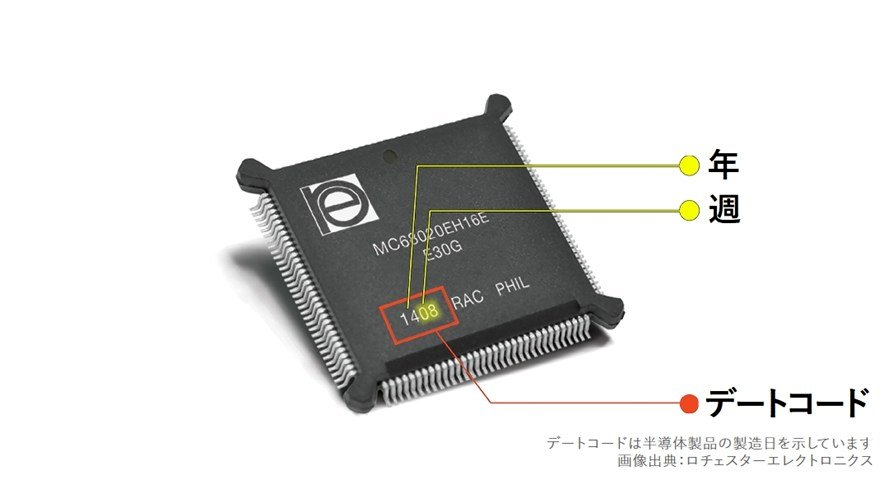
Date Code was introduced into semiconductor manufacturing during the 1960s. Its purpose was to help manufacturers track production dates, manufacturing lots, material records, and product history throughout the supply chain.
At the time, semiconductor packaging materials and storage technologies were far less advanced than today. Moisture absorption, oxidation, solderability degradation, and tin whisker growth were genuine concerns. As a result, the industry gradually adopted the informal “2-year Date Code rule” as a conservative method to reduce reliability risks.
Over time, this guideline became deeply embedded into procurement practices. Many buyers still specify:
- Date Code within 12 months
- Maximum 24-month inventory
- “Factory fresh” stock only
But the semiconductor industry of today is very different from the industry of 40 years ago.
Modern packaging materials, moisture barrier bags, vacuum sealing, humidity-controlled storage, and advanced handling standards have significantly improved long-term component preservation. As a result, relying only on Date Code no longer provides a complete picture of component reliability.
This is where Semiconductor Traceability becomes critical.
Why Semiconductor Traceability Matters More Than Ever
As semiconductor supply chains become increasingly global and complex, manufacturers are placing greater emphasis on Semiconductor Traceability systems to ensure reliability, authenticity, and long-term inventory control.
Unlike Date Code alone, Semiconductor Traceability focuses on the complete lifecycle history of a component, including:
- Original manufacturer source
- Distribution channel records
- Storage conditions
- Packaging integrity
- Inspection reports
- Lot tracking
- Handling documentation
In other words, Semiconductor Traceability allows companies to verify whether a semiconductor product has been properly managed throughout its lifecycle.
This has become especially important in industries with strict reliability requirements, including:
- Aerospace
- Medical electronics
- Automotive systems
- Industrial control equipment
- Defense applications
In these sectors, counterfeit components or poorly managed inventory can lead to catastrophic failures.
Because of this, modern supply chain strategies increasingly prioritize Semiconductor Traceability over simplistic Date Code limitations.
JEDEC JEP160 and the Rise of Semiconductor Traceability Standards
As the industry evolved, formal standards were introduced to strengthen Semiconductor Traceability and long-term storage practices.
JEDEC JEP160
JEDEC JEP160 provides guidelines for long-term storage of electronic components. The standard defines best practices for:
- Temperature control
- Humidity management
- Moisture protection
- Packaging methods
- Inventory preservation
The release of JEDEC JEP160 was significant because it formally acknowledged that semiconductor components can remain functional for extended periods when stored correctly.
This marked an important shift in how the industry viewed long-term inventory management and Semiconductor Traceability.
SAE AS6496
SAE AS6496 focuses heavily on Semiconductor Traceability, counterfeit prevention, and distribution chain transparency.
The standard requires distributors to maintain:
- Complete inventory records
- Chain-of-custody documentation
- Product authenticity verification
- Storage history
- Inspection traceability
For high-reliability sectors, Semiconductor Traceability under AS6496 has become essential for managing long-lifecycle semiconductor inventory.
Can Older Semiconductor Inventory Still Perform Reliably?
Recent testing and industry research suggest the answer is yes.
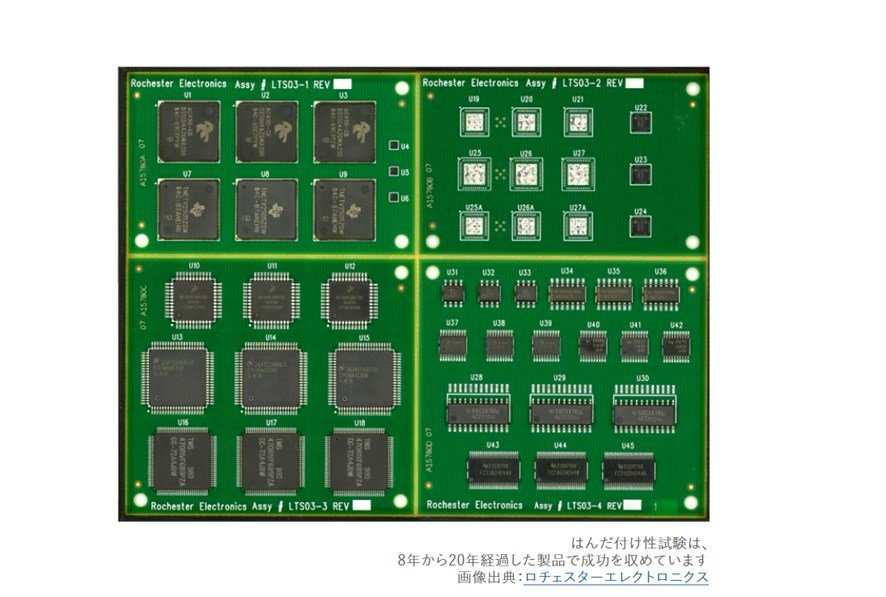
According to long-term evaluations published by Rochester Electronics, semiconductor components manufactured 8 to 20 years ago were tested under controlled conditions and successfully passed:
- Electrical performance testing
- Mechanical reliability testing
- Solderability testing
In many cases, no significant degradation was detected.
This evidence challenges the long-standing assumption that older Date Codes automatically indicate higher risk.
Advancements in semiconductor materials and packaging technologies have greatly improved durability. Modern storage environments now include:
- Humidity-controlled warehouses
- Vacuum-sealed packaging
- Nitrogen storage
- Moisture sensitivity management
- Anti-oxidation handling
Combined with proper Semiconductor Traceability, these practices allow long-term semiconductor inventory to remain reliable far beyond the traditional 2-year rule.
The Real Risk Is Often Counterfeit Inventory, Not Older Inventory
One of the biggest misconceptions in electronics procurement is that older inventory is inherently dangerous.
In reality, the greater risk is often inventory without proper Semiconductor Traceability.
Counterfeit semiconductors, unauthorized redistribution, remarked parts, and recycled components continue to create serious challenges throughout the global electronics industry. Fresh Date Codes do not guarantee authenticity.
Without proper Semiconductor Traceability, buyers may have no visibility into:
- Original sourcing
- Storage conditions
- Handling history
- Inspection procedures
- Product authenticity
This is why modern semiconductor procurement increasingly depends on verified supply chain documentation rather than Date Code alone.
Why Long-Lifecycle Industries Depend on Semiconductor Traceability
Industries with extended product lifecycles cannot rely solely on newly manufactured semiconductors.
Medical systems, industrial equipment, transportation infrastructure, and aerospace platforms often require support for 15 to 30 years. Meanwhile, many semiconductor manufacturers discontinue components much earlier.
As a result, long-term inventory management has become essential.
In these environments, Semiconductor Traceability helps organizations:
- Maintain supply continuity
- Validate older inventory
- Manage EOL components
- Reduce redesign costs
- Support regulatory compliance
- Minimize counterfeit exposure
Without strong Semiconductor Traceability, maintaining long-term electronic systems becomes increasingly difficult.
How 7SEtronic Supports Semiconductor Traceability for OEM and EMS Customers
For many OEMs and EMS providers, the challenge is no longer simply finding available inventory. The real challenge is sourcing components with reliable Semiconductor Traceability.
This becomes especially critical for:
- EOL semiconductors
- Industrial ICs
- Long lead-time components
- Legacy MCU platforms
- Hard-to-find analog devices
7SEtronic supports customers with:
- Semiconductor Traceability support
- Inventory verification
- Long-term inventory sourcing
- Packaging inspection
- BOM risk management
- Alternative component evaluation
- Supply chain continuity support
For many manufacturers, especially small and mid-sized factories, maintaining production stability matters more than chasing the newest Date Code available in the market. A stopped production line tends to be dramatically more expensive than a component manufactured a few years earlier. Civilization keeps rediscovering this lesson every quarter.
Conclusion
The traditional “2-year Date Code rule” was created during an earlier stage of semiconductor manufacturing, when storage technologies and packaging materials were far less advanced.
Today, the industry is evolving.
Modern storage standards, advanced packaging materials, and stronger Semiconductor Traceability systems are reshaping how manufacturers evaluate long-term semiconductor inventory.
Evidence increasingly shows that properly stored semiconductor products can remain reliable well beyond two years. As global supply chains continue to face shortages, EOL challenges, and sourcing volatility, Semiconductor Traceability is becoming one of the most important tools for ensuring supply chain resilience.
For OEMs, EMS providers, and electronics manufacturers, understanding Semiconductor Traceability is no longer optional. It is becoming a core part of modern semiconductor procurement strategy.
FAQ
Q1: Can semiconductor components older than 2 years still be reliable?
A: Yes. Properly stored components can maintain stable performance for over 10–15 years.
Q2: What is more important than Date Code?
A: Semiconductor Traceability, storage conditions, and verified sourcing are often more important.
Q3: Why is Semiconductor Traceability critical?
A: Semiconductor Traceability helps verify authenticity, storage history, and long-term reliability.
Also see:
- Semiconductor Traceability vs Date Code: Can Older IC Inventory Still Be Reliable?
- From Components Sourcing to PCB Assembly: How 7SEtronic Supports OEM & EMS Projects
- Infineon Earnings Report: What OEM and EMS Buyers Need to Know About the 2026 Chip Market
- ICM-42688-P Price Surge Explained: From 9 RMB to 100 RMB and Back
- TMS320F2837x Alternative: Reducing Cost and Securing Supply for Procurement Teams