

Overview
The NCP1607BDR2G is a Power Factor Correction (PFC) controller IC designed for offline AC-DC power conversion front ends.
It is widely used in AC adapters, LED lighting power supplies, and consumer electronics power stages, where high power factor, low harmonic distortion, and low startup current are required.
The device operates in Critical Conduction Mode (CrM), offering a balance between efficiency, simplicity, and compliance with international power quality standards.
Core Parameters
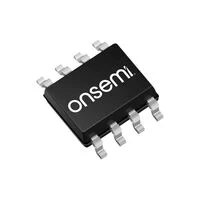
| Parameter | Specification |
|---|---|
| Device Type | PFC Controller IC |
| Control Mode | Critical Conduction Mode (CrM) |
| Supply Voltage Range | 9.5 V to 20 V |
| Startup Current | Typically < 40 µA |
| Operating Temperature | −40°C to +125°C |
| Gate Drive Capability | 500 mA source / 800 mA sink |
| Package | SOIC-8 |
| Compliance | RoHS, Pb-Free |
These parameters make the device suitable for PFC front-end power supplies, especially where low startup power consumption and compact design are critical.
Features
- Critical Conduction Mode operation for near-unity power factor
- Low startup and operating current for improved system efficiency
- Integrated transconductance error amplifier
- Built-in overvoltage and undervoltage protection
- High-current gate driver for external MOSFET control
- Minimal external component count
- Industrial-grade temperature range
Typical Application Scenarios
- Offline AC-DC adapters and chargers
- LED lighting power supplies
- Consumer electronics power modules
- Industrial auxiliary power supplies
- Energy-efficient power conversion systems
In similar offline PFC applications, the NCP1608BDR2G is frequently referenced alongside the NCP1607BDR2G. Both devices operate in critical conduction mode and target high power factor AC-DC front ends, allowing designers to choose based on protection features, operating range, and specific power-supply requirements.
Performance Comparison
| Feature | NCP1607BDR2G | Traditional Linear PFC | Digital PFC Controllers |
|---|---|---|---|
| Power Factor | High (≈1) | Moderate | Very High |
| Design Complexity | Low | Low | High |
| Startup Current | Very Low | Medium | Low |
| External Components | Few | Many | Many |
| Cost Efficiency | High | Medium | Lower |
Compared to traditional linear PFC solutions, the NCP1607BDR2G delivers higher efficiency and better power quality. Compared with digital PFC controllers, it offers lower cost and simpler implementation for mainstream power levels.
Conclusion
The NCP1607BDR2G is a reliable and efficient PFC controller tailored for offline AC-DC power supplies. Its CrM operation, low startup current, and integrated protection features make it an excellent choice for designers seeking compliance, efficiency, and simplicity in modern power systems.
Manufacturer Profile

onsemi (ON Semiconductor) is a global leader in power and signal management solutions. The company provides a broad portfolio of PFC controllers, power MOSFETs, and energy-efficient ICs widely used in automotive, industrial, and consumer electronics markets.
FAQ
Q1: What type of applications is the NCP1607BDR2G designed for?
A: It is designed for offline AC-DC power supplies requiring power factor correction, such as adapters, LED drivers, and consumer electronics.
Q2: What control method does the NCP1607BDR2G use?
A: The device operates in Critical Conduction Mode (CrM), which helps achieve high power factor and reduced harmonic distortion.
Q3: What are the key advantages of using this controller?
A: Key advantages include low startup current, simplified external circuitry, stable CrM control, and built-in protection functions.
Q4: How can the quality of the NCP1607BDR2G be verified?
A: 7SEtronic follows a complete and standardized quality inspection SOP, including label verification, visual inspection, and X-RAY analysis, providing a reliable reference for quality validation.
For more information and to review our available inventory, please contact our team for detailed pricing, current stock levels, and any additional technical support you may need.
You can find more component guides and application notes in our Component Technical Guides section: