
How the Latest Passive Component Price Increase Is Reshaping the Market
In January 2026, the passive component market entered a new phase as major Taiwanese manufacturers officially announced price adjustments.
On January 16, Yageo released a notice confirming a resistor price increase, followed shortly by Ta-I Technology and Walsin Technology.
This development marks a clear escalation of the ongoing passive component price increase cycle that began in 2025. What was initially concentrated in tantalum capacitors has now expanded into mainstream resistor categories.
For OEMs, EMS providers, and overseas small-to-medium manufacturers, the key concern is no longer whether a passive component price increase exists, but how sustainable this pricing environment will be and how procurement strategies should adapt.
1. Taiwanese Resistor Manufacturers Drive a New Round of Passive Component Price Increase
Yageo Announces Broad Resistor Price Adjustments
According to Taiwanese media, Yageo confirmed that starting February 1, prices for selected resistor products will increase by approximately 15–20%.
The affected product range includes commonly used chip resistor sizes such as 0402, 0603, 0805, and 1206. These sizes are widely applied across industrial electronics, power modules, and general-purpose PCB designs, making the announcement particularly relevant to global buyers.
Yageo attributed this passive component price increase to rising production costs, especially the sharp increase in precious metals including silver, ruthenium, and palladium. These materials play a critical role in thick-film resistor manufacturing and have significantly altered cost structures.
In parallel, distributors in mainland China received similar price adjustment notices from KEMET, a Yageo subsidiary, with thick-film resistor prices increasing by around 15% from late January.
Ta-I Technology Follows With 0402–1206 Resistor Price Increases
On the same day Yageo issued its announcement, Ta-I Technology notified distributors of an upcoming resistor price increase covering 0402–1206 sizes.
Ta-I’s monthly production capacity is estimated at around 60 billion units. Any adjustment at this scale has an immediate effect on the broader passive component supply chain.
Industry sources indicate that Taiwanese manufacturers had remained relatively cautious despite earlier price increases from mainland Chinese suppliers. Once Yageo initiated the adjustment, the broader passive component price increase momentum became difficult to resist.
Walsin Technology Expands the Passive Component Price Increase Across Full Size Ranges
Walsin Technology Group also confirmed its participation in the current passive component price increase cycle.
Earlier in January, its subsidiary announced price increases of 15–20% for thermistors and 20–25% for varistors. On January 21, Walsin formally announced that resistor products from 0201 to 1206 sizes, covering the full resistance range, would see new pricing effective February 1.
Exact increases vary by specification and application, reinforcing the trend toward differentiated pricing rather than uniform adjustments across all passive components.
Smaller Manufacturers Begin Inventory and Pricing Adjustments
As leading suppliers implement the passive component price increase, smaller manufacturers are reacting quickly.
Several Taiwanese and mainland suppliers reported order growth of 20–30% in thick-film resistors, with book-to-bill ratios exceeding 1.5. Inventory levels for raw materials and finished goods have been raised to more than three months, signaling expectations of continued demand recovery.
This behavior suggests the passive component price increase is now being treated as a medium-term structural adjustment rather than a short-term fluctuation.
2. Market Reaction After the New Year: Has the Passive Component Price Increase Stabilized?
Quotation Behavior Returns to Normal
Before and shortly after the New Year, temporary quotation suspensions and rapid price changes were common across the passive component market. By mid-January, most distributors had resumed normal quoting practices.
While some specific models remain tight, the broader market response indicates that the initial shock of the passive component price increase has largely been absorbed.
Price Performance by Category
Market feedback shows clear segmentation:
Resistors have experienced the most visible passive component price increase, with overall pricing roughly 10–20% higher than pre–New Year levels, particularly for 0201–1206 sizes.
Capacitors show more moderate increases for standard MLCCs, while polymer tantalum capacitors and high-capacitance or high-voltage MLCCs remain constrained.
Ferrite beads and inductors have also seen notable increases for selected models, sometimes exceeding resistor price movements.
Importantly, most resistor price adjustments were concentrated in the first week after the New Year. Since then, prices have entered a high-level but stable phase.
Limited Spot Market Impact From Official Announcements
Despite multiple factory notices, the spot market reaction to the passive component price increase has been relatively restrained.
Distributors report that many customers had already secured inventory early in the cycle. In addition, spot prices for many resistor brands were adjusted before official manufacturer announcements were released.
Because resistors represent a small portion of total BOM cost, the passive component price increase has had limited impact on finished product pricing, reducing urgency among end customers.
3. Timeline of the Current Passive Component Price Increase Cycle
The current cycle developed gradually:
In April 2025, Panasonic and KEMET initiated tantalum capacitor price increases.
From May to October, multiple rounds followed from Kyocera and other suppliers.
From November onward, the passive component price increase spread to resistors, inductors, and ferrite beads.
In December, numerous mainland Chinese manufacturers issued price adjustment notices.
By January 2026, major Taiwanese resistor manufacturers formally joined the cycle.
4. Core Drivers Behind the Passive Component Price Increase
Raw Material Cost Inflation
Silver remains a critical raw material for many passive components. In 2025, NYMEX silver futures rose by approximately 143% year-on-year, becoming a direct trigger for the current passive component price increase.
Other metals such as tin, copper, cobalt, and bismuth also contributed to sustained cost pressure across the supply chain.
AI Infrastructure Demand Reshaping Supply Allocation
AI-driven demand is accelerating the structural shift behind the passive component price increase.
Murata estimates that a single NVIDIA GB300 server requires approximately 30,000 MLCCs, while one server rack may consume up to 440,000 units. By 2030, AI server demand for MLCCs is expected to be more than three times higher than in 2025.
This shift continues to absorb capacity that previously served consumer electronics, reinforcing upward pricing pressure.
5. What the Passive Component Price Increase Means for OEM Procurement
At this stage, the passive component market has transitioned from volatility to relative stability at higher price levels.
For overseas small and mid-sized manufacturers, the passive component price increase suggests that aggressive short-term price corrections are unlikely. Strategic sourcing, controlled inventory planning, and flexible part qualification are becoming more important than chasing marginal price differences.
For projects requiring stable long-term supply, early engagement with reliable distributors can reduce exposure to future pricing and allocation risks.
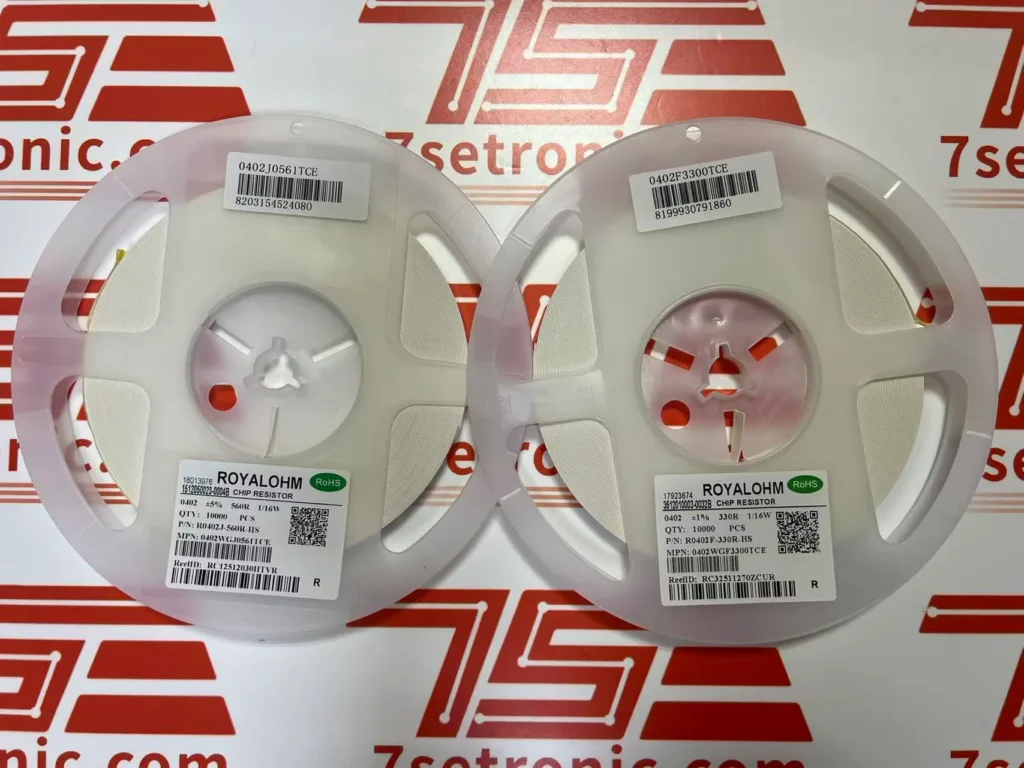
If you are currently evaluating pricing or lead times for resistors, MLCCs, tantalum capacitors, ferrite beads, or inductors under the ongoing passive component price increase, 7setronic can assist by providing market-aligned sourcing insights based on real inventory and manufacturer policies.
FAQ
Q1: Will Taiwanese resistor prices continue to rise?
A1: Short-term prices are likely to remain stable at current levels.
Q2: Is there still a shortage risk in the spot market?
A2: Standard models are mostly available; some high-end parts remain tight.
Q3: Do resistor price increases significantly impact BOM cost?
A3: Generally no, due to low unit pricing.
Understand market trends and plan your sourcing more effectively—our other blogs provide deeper insights, plus 7setronic can support your procurement along the way.
- How the AI Server Supply Chain Is Reshaping PCB, MLCC, Copper Foil and Electronic Glass Fiber Markets
- Top 12 Global MLCC Manufacturers in 2026: Financial Performance, Market Position and Supply Chain Trends
- NVIDIA Rubin BOM Analysis: What Component Buyers Need to Know Before the Next AI Hardware Wave
- Semiconductor Traceability vs Date Code: Can Older IC Inventory Still Be Reliable?
- From Components Sourcing to PCB Assembly: How 7SEtronic Supports OEM & EMS Projects