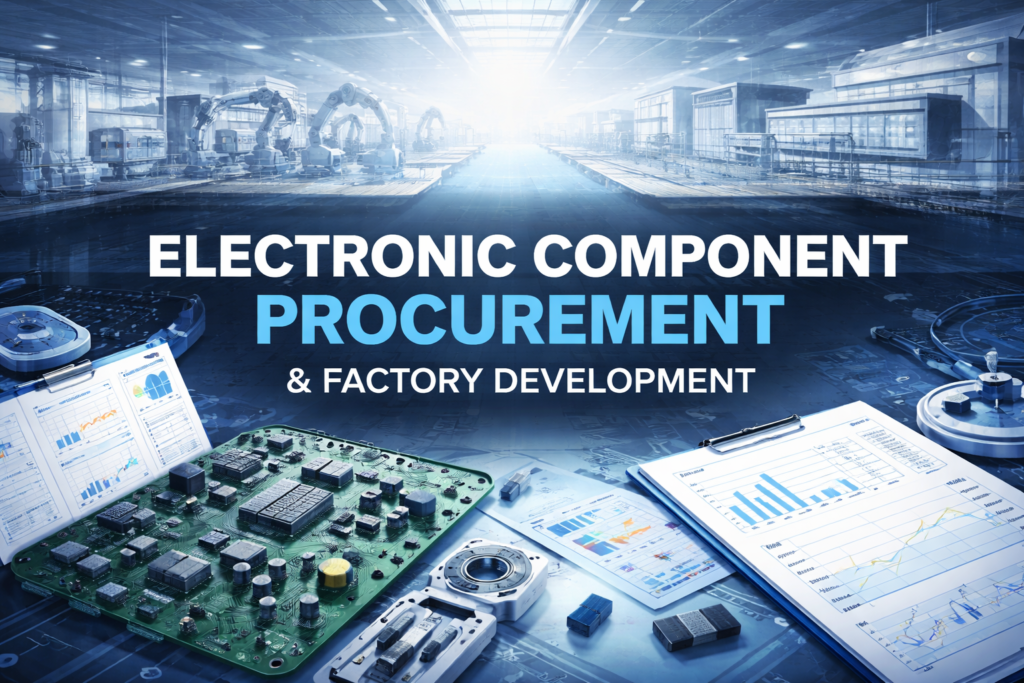
As factory output expands, electronic component procurement is often treated as a linear scaling problem. In reality, procurement performance depends far more on whether the procurement structure evolves alongside factory growth.
During trial production or small-batch phases, the core challenge in Electronic Component Procurement is usually whether required components can be sourced at all. However, when capacity, order volume, and product variants increase simultaneously, Electronic Component Procurement no longer centers on acquiring individual materials. Instead, it becomes a question of supply stability, coordination capability, and the controllability of the overall cost structure.
If early-stage procurement models, largely driven by experience and ad-hoc decisions, are carried forward without structural adjustment, scaling up tends to magnify previously manageable issues into systemic risks.
It is precisely at this stage that procurement begins to shift from merely supporting production execution to directly impacting delivery commitments, capacity planning, and financial models. Whether the procurement strategy matches the factory’s development stage often determines whether expansion is a sustainable increase or a high-risk, large-scale undertaking.
This article analyzes the problems arising from expanding procurement scale at different stages of factory development. It further explores why supplier structure, system capabilities, collaboration mechanisms, and logistics and inventory design must be upgraded in tandem with scale, rather than simply focusing on “buying more” or “negotiating lower prices.”
How Should Electronic Component Procurement Scale Adapt to Changes in Factory Development Stages?
Before discussing specific procurement methods, it’s necessary to clarify a premise: expanding procurement scale is not a linear growth issue, but rather a process of “strategic leaps” that occur with the factory’s development stage. If the procurement strategy is mismatched with the factory’s stage, scaling up often only amplifies risks.
Based on the practices of numerous manufacturing companies, factory development can be roughly divided into the following stages, each with significantly different procurement priorities:
Early Stage: Trial Production and Small-Batch Delivery (Procurement Focuses on “Availability”)
At this stage, the core issue in Electronic Component Procurement is whether the required components can be sourced at all and whether delivery can be completed as planned. Procurement volumes are typically small, with suppliers limited to one or a few sources, and decisions rely heavily on personal experience and ad-hoc communication.
In early-stage Electronic Component Procurement, flexibility and responsiveness often take precedence over cost structure. However, this approach also makes it easiest to develop a dependency on a single supply channel, creating latent risks as production scales.
Growth Stage: Order Volume Increases and Model Numbers (Procurement Focuses on “Replicability”)
As order volume steadily increases and the number of SKUs rises, the challenge for procurement shifts from “being able to buy” to “being able to buy consistently and reliably.” If the early transactional procurement model is still used at this stage, problems will quickly emerge: delivery time fluctuations, unclear alternative materials, and significantly increased internal coordination costs.
At this stage, companies typically need to begin introducing:
- Dual or multiple supply structures
- Preliminary supplier tiering
- Basic systematic management tools
Otherwise, procurement will become a hidden bottleneck in the expansion process.
Scaling Stage: Multiple Production Lines in Parallel Operation and Cross-Regional Delivery (Procurement Focuses on “System Stability”)
When factories enter the stage of multiple production line operation, cross-regional delivery, or long-term customer projects, procurement is no longer a “support department” but a key link directly affecting delivery commitments and financial models. At this stage, expanding procurement scale essentially tests the following capabilities:
- Does the supplier system possess redundancy and switching capabilities?
- Does the system support forecasting, analysis, and traceability?
- Are costs controllable, not just the lowest unit price?
At this stage, companies that successfully expand their procurement scale have often completed the shift from “buying more” to “buying more stably.”
Mature Stage: Cost Optimization and Risk Management in Parallel (Procurement Focuses on “Long-Term Controllability”)
After production capacity and customer structure have stabilized, the focus of procurement further shifts to cost structure optimization, supply chain risk management, and long-term collaborative efficiency. At this point, the focus of procurement strategy is not short-term price reductions, but rather:
- Does it possess stability that transcends economic cycles?
- Can it maintain delivery continuity amidst market fluctuations?
- Can it support rapid replication of new projects and new regions?
From this perspective, expanding procurement scale is not the end, but the starting point for entering a higher level of management complexity.
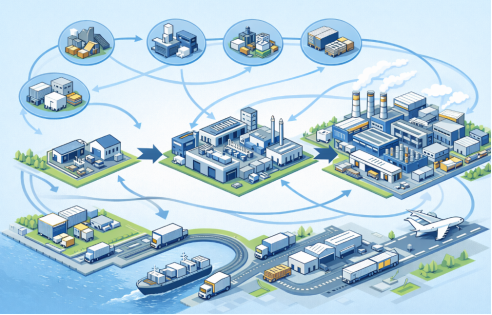
In the electronic components industry, which link is most prone to failure after scaling up Electronic Component Procurement?
In the electronic components industry, a common problem during the expansion of procurement scale is not “unable to buy,” but rather the ineffectiveness of existing procurement models as the scale increases.
Some practices that are tolerable in the small-scale stage often quickly evolve into systemic risks once mass production begins.
Typical failure scenarios include:
Over-reliance on a single channel for components
For MCUs, power devices, memory chips, or specific brand ICs, a single supply path established early on is easily disrupted after mass production due to original manufacturer allocation, agent strategy adjustments, or market shortages, directly impacting the delivery of complete products.
Alternative material strategies lagging behind order growth
In the small-batch stage, alternative materials often rely on engineers’ ad-hoc judgments; however, with multiple models in parallel production, without a systematic alternative material verification and approval mechanism, any anomaly in any part number can slow down the entire production line.
Scattered delivery and pricing information, distorted decision-making basis
When inquiries, orders, and delivery dates in Electronic Component Procurement are still mainly handled through email and personal communication, information inconsistencies become increasingly common as procurement scales up. These inconsistencies distort decision-making across planning, procurement, and production, amplifying misalignment as factory complexity increases.
The common thread across these issues is that they are not isolated points of failure, but systemic risks arising from a mismatch between the Electronic Component Procurement structure and the factory’s operating scale.
Therefore, subsequent adjustments to supplier structure, system capabilities, and collaboration mechanisms are not merely “optimization options,” but rather necessary conditions for scaling up.
Why is it essential to redesign the supplier structure after factory expansion?
As production increases, reliance on a single supplier in Electronic Component Procurement introduces significant systemic risk. Delays, quality fluctuations, or regional disruptions impact not just individual orders but the continuous operation of the entire production line. Therefore, supplier diversification in Electronic Component Procurement is not simply about “finding more suppliers,” but about strategically building a replaceable, switchable, and verifiable supply system.
In factory development, many companies’ problems do not lie in “lacking alternative suppliers,” but in whether the alternatives are truly usable—whether they are validated, whether they have immediate scaling capabilities, and whether they are familiar with your processes and quality requirements.
Dual Sourcing
Designating at least two qualified suppliers for key materials or core processes allows for rapid switching of production sources in unforeseen circumstances, effectively mitigating risks from regional supply disruptions, single-factory shutdowns, or capacity constraints.
For factories with expanding procurement scale, the more significant value of dual sourcing lies in:
- Providing real flexibility for capacity expansion, rather than mere paper redundancy
- Retaining long-term leverage in price and delivery negotiations
- Avoiding being “reversely bound” at key junctures
Tiered Segmentation
Dividing suppliers into different tiers helps maintain clear management priorities even as scale increases:
- Strategic Suppliers: Typically handle core materials or important technologies, suitable for medium- to long-term agreements, and deep collaboration at the forecasting, process, and quality levels.
- Preferred Suppliers: Possessing stable performance in quality, delivery time, and price, serving as the primary execution-level supply source.
- Transactional Suppliers: Used for non-critical materials, improving efficiency and reducing management costs through standardized processes and automated procurement.
This tiering is not a label, but rather a way to focus limited management resources on the nodes that truly impact production line stability as procurement scales up.
Global vs. Local Balance
As procurement scales up, simply pursuing the lowest cost often sacrifices flexibility. A more robust structural design involves leveraging international suppliers to achieve economies of scale while retaining local or regional suppliers to handle urgent orders, engineering changes, or small-batch demands.
From a factory manager’s perspective, this structure essentially creates a buffer between cost efficiency and responsiveness, rather than betting on a single direction.
Why is a Shift from Manual Processes to Systematic Management Necessary After Procurement Scales Up?
When order volume and the number of suppliers grow simultaneously, manual processes relying on emails and spreadsheets quickly become bottlenecks. Expanding procurement scale inherently requires systems that are replicable, traceable, and analyzable; otherwise, management complexity increases exponentially.
Digitalizing Procurement
Managing inquiry, order, delivery, and reconciliation processes through a centralized platform significantly reduces manual communication costs and minimizes execution deviations caused by inconsistencies in information.
For factories producing multiple projects and models in parallel, this step often determines whether procurement can remain controllable.
ERP Integration
Integrating the procurement system with ERP, MRP, or production planning systems allows material demand to be directly driven by production rhythm, helping to reduce human forecasting errors and improve overall responsiveness.
This means procurement is no longer just about “receiving demand,” but becomes part of the production plan.
Expenditure Visualization Tools
As procurement amounts and categories increase, the expenditure structure itself becomes an important management object.
Data analysis tools can identify integration opportunities between different factories and materials, providing foundational data support for centralized negotiations, annual framework agreements, and cost restructuring.

Why is cost control more difficult as the scale of electronic component procurement expands?
In electronic component procurement, increased scale does not necessarily equate to a decrease in unit cost.
As the volume and number of models procured increase, the cost structure itself changes, not just in the unit price of materials.
For electronic components, cost factors that gradually emerge after scaling up production include:
Downtime and Switching Costs Due to Unstable Delivery Dates
Even with lower unit prices, a single delay in the delivery of a main control IC can lead to delays in the entire product, overtime production, or temporary solution switching. The overall cost often far exceeds the unit price difference.
Increased Costs of Emergency Procurement and Logistics
Without forecasting and inventory buffers, air freight, order splitting, and the intervention of temporary channels can significantly erode the price advantage originally gained through scale negotiations.
Quality Fluctuations and Verification Costs
After scaling up production, the introduction of new channels or batches makes issues with incoming material consistency and reliability more likely to surface, increasing rework, testing, and engineering resource consumption.
Therefore, a key objective of scaling up electronic component procurement is not simply to lower prices, but to establish a balance between delivery stability, predictability, and overall cost.
This is why systematic management and supplier collaboration are more important than price negotiations at the scale-up stage.
Why must the shift from price negotiations to supplier collaboration occur after scaling up procurement?
With increased procurement scale, relying solely on price negotiations is no longer sufficient to support stable long-term delivery. At this point, the relationship between procurement and suppliers needs to be upgraded from an “order-based relationship” to a predictable and manageable collaborative one.
Long-term contracts and capacity lock-in: Locking in price ranges and capacity quotas for key materials through multi-year agreements not only helps reduce cost fluctuation risks but also makes suppliers more willing to prioritize resource allocation. This is particularly effective during periods of tight capacity.
Performance scorecard mechanism: Establishing a standardized KPI system, such as on-time delivery rate, quality consistency, and response speed, provides quantifiable evidence of supplier performance, avoiding long-term reliance on experience-based judgments or individual relationships for decision-making.
Multi-tiered supply chain visibility: As procurement scales to a certain extent, risks often lurk in second- or even third-tier suppliers. Understanding the source of raw materials and the distribution of decision-making nodes allows for the early identification of potential bottlenecks, rather than reactive responses after problems occur.
How should logistics and inventory be upgraded in tandem with increased procurement scale?
Scale expansion often amplifies hidden problems in existing logistics and inventory strategies, such as inventory turnover imbalances, increased transportation costs, or insufficient warehousing capacity. Without synchronized adjustments, it’s easy to create the counterproductive effect of “increased procurement volume, but more unstable delivery.”
Forecast-based procurement collaboration: By providing core suppliers with medium- to long-term demand forecasts, we help them plan their capacity and raw material reserves in advance, thereby reducing the risk of stockouts or last-minute order increases during peak seasons. This is also a key indicator of procurement shifting from an execution function to a collaborative operation.
Strategic outsourcing and local support: In cross-regional or cross-border procurement scenarios, introducing third-party logistics (3PL) or local agents can effectively share non-core functions such as quality inspection, warehousing, and short-haul transportation, allowing internal teams to focus on key decisions.
Leveraging economies of scale: As procurement volume increases, by consolidating orders, bulk shipping, and using mixed palletizing, we can continuously release economies of scale in transportation and unit costs, rather than being dragged down by scale.
When factory capacity continues to expand, expanding procurement scale is no longer simply about “placing more orders.” The real challenge lies in whether we have the visibility to cover all decision-making nodes in the supply chain, whether we can form a predictable and collaborative operating model with suppliers, and whether the entire procurement system can remain stable during the expansion process without excessively amplifying risks.
At this stage, more and more manufacturing companies are realizing that procurement collaborators with expertise in electronic component categories, understanding of supply and demand dynamics across multiple regions, and the ability to coordinate supplier execution can significantly reduce friction costs during expansion.
7SEtronic has long served manufacturing companies in their growth phase, supporting them in achieving effective coordination between procurement planning, supply capacity, and delivery schedules as they expand their electronic component procurement. Compared to transaction-centric procurement methods, 7SEtronic emphasizes structured collaboration and supply stability, especially during periods of rapid production growth or significant market volatility.
For growing manufacturers, electronic component procurement becomes a structural capability rather than a transactional function. Whether procurement can scale without amplifying risk often determines whether factory expansion remains controllable.