
Overview
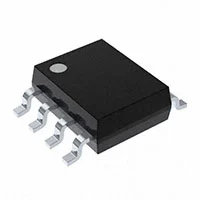
The DS1302ZN is a low-power real-time clock (RTC) providing timekeeping for seconds, minutes, hours, day, date, month, and year with automatic leap-year compensation through 2100. It communicates via a simple 3-wire interface and includes 31 bytes of battery-backed RAM, allowing small nonvolatile data storage alongside the calendar clock. With an operating supply down to 2.0 V and ultra-low standby current, the device works well in battery-powered or always-on systems. The built-in trickle-charger supports charging of backup sources such as supercapacitors or rechargeable cells, extending system reliability during power loss.
Core Parameters
| Parameter | Specification |
|---|---|
| Operating Voltage (VCC) | 2.0 V to 5.5 V |
| Timekeeping Current (at 3 V) | 300 nA typical |
| Interface | 3-wire (CE, I/O, SCLK) |
| RAM | 31 bytes, battery-backed |
| Clock Accuracy | 32.768 kHz crystal-controlled |
| Backup Supply (VBAT) | 2.0 V to 5.5 V |
| Trickle Charger | Yes, programmable |
| Operating Temperature | –40°C to +85°C |
| Clock Calendar | Seconds to Year + Leap-year correction |
| Package | 8-pin SOIC (ZN suffix) |
Features
- Low-power RTC with full calendar and timekeeping (seconds to year)
- 31 bytes of battery-backed RAM for storing system parameters
- 300 nA typical backup current, ideal for long battery life
- Simple 3-wire serial interface for easy microcontroller integration
- Programmable trickle-charging circuit supports rechargeable backup sources
- Single-byte burst read/write for fast data transfers
- Automatic power switching between VCC and VBAT
- Clock halt control for low-power standby operation
- Crystal frequency: 32.768 kHz standard timekeeping crystal
Typical Application Scenarios
| Application | Why DS1302ZN Fits |
|---|---|
| Smart Meters | Extremely low backup current extends battery life for long-term deployment |
| Consumer Electronics | Retains time and user settings even when main power is removed |
| Portable Devices | Low operating voltage and minimal current draw suit small batteries |
| Embedded Systems with RTC + NV Data Need | Built-in 31-byte RAM allows configuration storage |
| Security Systems | Maintains logs and timestamping during outages |
| Point-of-Sale Terminals | Ensures stable clocking for financial timestamping |
Performance Comparison
| Feature | DS1302ZN | Basic RTC | Advanced RTC with SRAM |
|---|---|---|---|
| Backup Current | 300 nA typical | 1–3 µA | 150–500 nA |
| Backup RAM | 31 bytes | None | 50–200 bytes |
| Interface | 3-wire | I²C/SPI | Mixed |
| Trickle Charger | Yes | Rare | Yes |
| Operating Voltage | 2.0–5.5 V | 1.8–5.5 V | 1.7–5.5 V |
The DS1302ZN stands out with its ultra-low current and built-in trickle charger, making it notably suitable for battery-driven or long-uptime systems.
Conclusion
The DS1302ZN is a practical and power-efficient real-time clock that combines ultra-low standby current, 3-wire simplicity, and battery-backed RAM, making it well-suited for portable electronics, metering, access control, and embedded systems that require reliable timekeeping during power failures. Its programmable trickle charger and automatic power switching enhance system resilience, ensuring that both the clock and user settings remain preserved under all conditions.
Manufacturer Profile

The DS1302ZN is part of the real-time clock portfolio originally developed by Maxim Integrated, now under Analog Devices (ADI). ADI continues to support these RTC devices with high-reliability designs, strong long-term availability, and industry-proven low-power performance for embedded and industrial applications.
For more information and to review our available inventory, please contact our team for detailed pricing, current stock levels, and any additional technical support you may need.
View more BLOGS you may be interested as below: