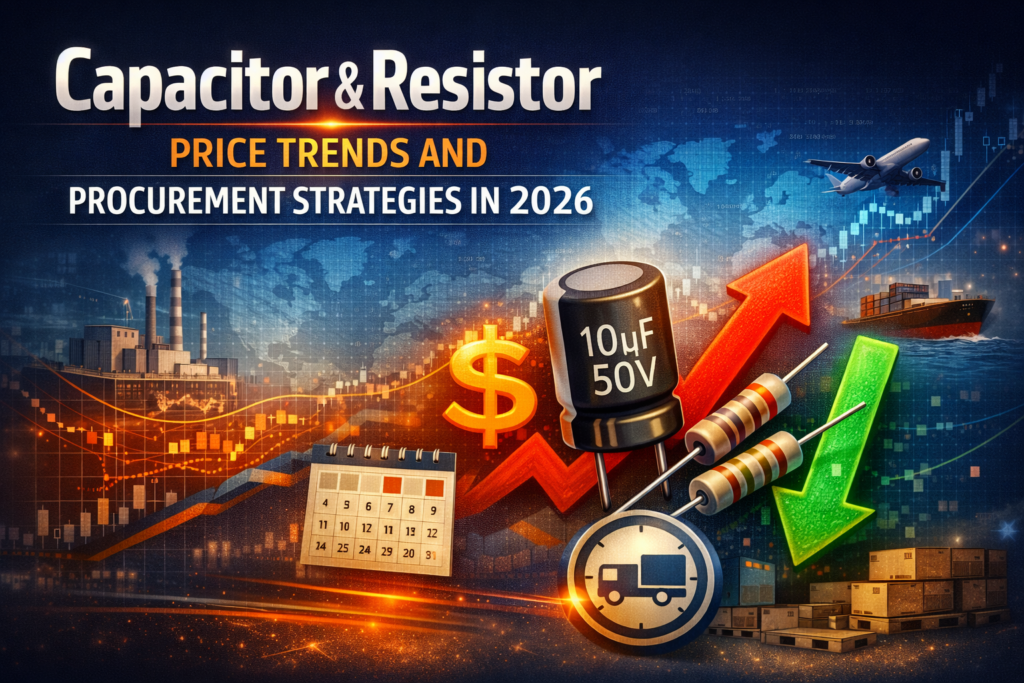
The procurement environment for capacitors and resistors has become increasingly complex in recent times. Continuously rising prices, longer lead times, and widening price discrepancies between different channels have disrupted the previously relatively stable procurement rhythm. Many companies have found that even with some procurement experience, it’s difficult to accurately judge the timing of orders in the current environment, and they may even incur higher costs due to information lag or decision-making delays.
This change is not only reflected in prices but is also gradually impacting production scheduling and delivery schedules. As uncertainty in material acquisition increases, companies often need to invest more effort in inventory management, supply screening, and risk control, making traditional procurement methods insufficient for stable operations. Against this backdrop, maintaining controllable procurement rhythms in a volatile environment while balancing cost and delivery has become a real challenge for many manufacturing companies.
Based on current market changes, we can start by analyzing price drivers and their actual impact on procurement and production to develop a series of actionable countermeasures. This will help companies plan their procurement more effectively during periods of rising prices and mitigate the ripple effects of supply instability.
Market Background: Capacitor and Resistor Prices Continue to Rise
Recently, the market prices of capacitors and resistors have shown a continuous upward trend, with significantly accelerated fluctuations. Some commonly used specifications have experienced multiple price adjustments within a short period, and the price differences between different channels have gradually widened. Delivery cycles that were previously measured in weeks have now commonly lengthened to several months, with some scarce models requiring even longer to secure stable supply. Combined, the amount of stock available in regular channels is gradually decreasing, requiring more time to be invested in price comparison, inventory confirmation, and supply stability assessment during the procurement process. According to industry insights from Digi-Key, supply chain volatility continues to impact component availability and pricing.
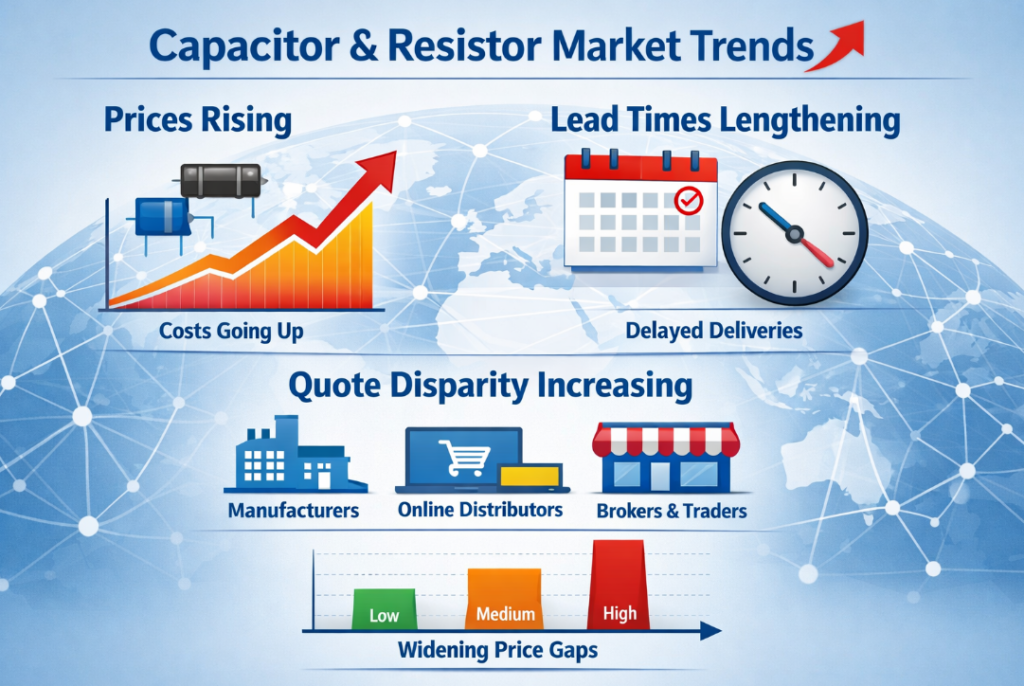
In actual procurement, many companies have already felt the pressure brought about by market changes. For example, regular models that could previously be quickly replenished now require advance ordering or even partial order locking; some materials that were previously price-stable have also begun to experience periodic price increases, making it difficult to accurately predict procurement budgets. Differences in inventory distribution between different regional markets also result in inconsistent availability and price levels for the same model across different channels, further increasing the complexity of procurement decisions.
Overall, this change is not accidental, but rather the result of a combination of factors, including supply rhythm, demand growth, and distribution efficiency. For manufacturing companies reliant on stable material supplies, the impact of price increases extends beyond procurement costs, further affecting production plans and delivery cycles. When material availability becomes uncertain, existing production schedules are more easily disrupted, requiring companies to allocate more buffer space in their production planning to cope with potential material shortages or delivery delays, thus increasing overall operational uncertainty.
Main Reasons Behind the Price Increase
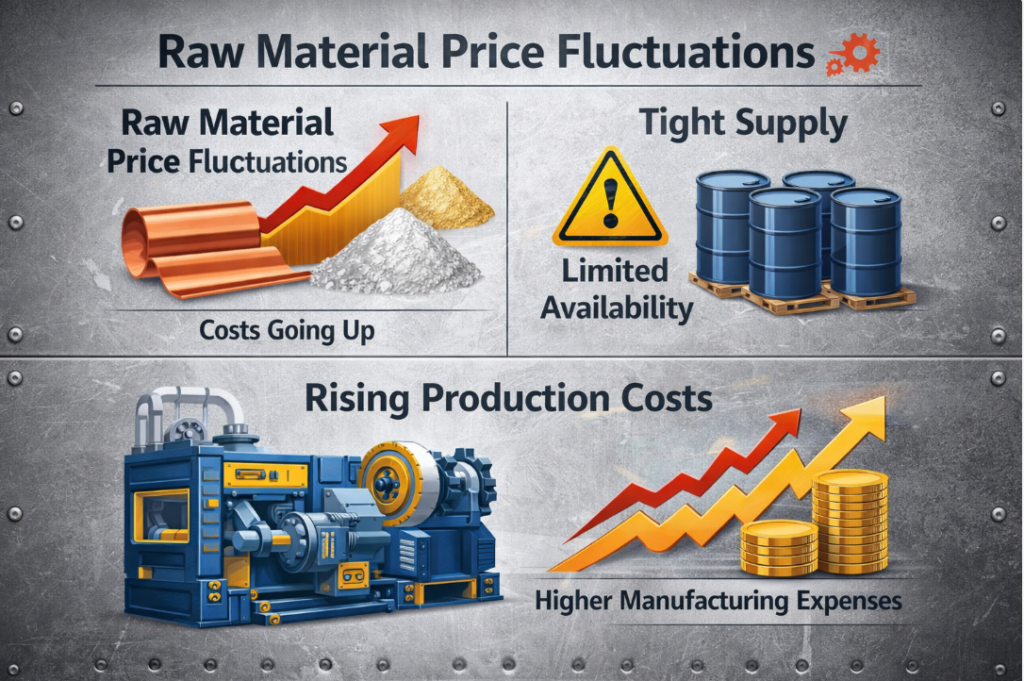
From the supply side, the continuous fluctuation of raw material costs directly impacts upstream production pressure in the capacitors and resistors market. The prices of copper foil, ceramic powder, and other key raw materials have fluctuated frequently in recent months, leading to a steady increase in production costs. Furthermore, some upstream manufacturers are adopting a cautious approach to capacity allocation, potentially reducing short-term output due to equipment maintenance, production schedule adjustments, or raw material supply constraints. This directly slows down the overall market supply rhythm, exacerbating tight conditions across the capacitors and resistors spot market.
On the demand side, demand for capacitors and resistors remains high across multiple industries, including automotive electronics, industrial control, new energy, and communication equipment. Especially in the new energy and automotive electronics market, driven by the growing demand for electric vehicles, battery management systems, and intelligent control modules, the demand for specific models and specifications of components has increased significantly. When supply cannot keep pace with the growth in demand, price increases become a natural market reaction.
From a distribution perspective, unstable logistics cycles and uneven regional inventory distribution have also exacerbated price volatility. Some regions experience short-term shortages due to transportation delays or extended customs clearance periods, while other regions have relatively ample inventory. This widens the gap in availability and pricing for the same model in different markets, increasing procurement difficulty and cost management complexity. Overall, the combined effect of changes in supply and demand structure and differences in distribution efficiency has led to a continuous upward trend in capacitor and resistor prices, pushing procurement strategies to a higher level of flexibility.
Direct Impact on Procurement and Production
The rising prices of capacitors and resistors not only increase procurement costs but also put direct pressure on companies’ procurement plans and production arrangements. In an environment of continuous price fluctuations, companies find it difficult to determine the optimal procurement time, easily leading to delayed orders or prolonged wait-and-see attitudes, which may further increase overall procurement costs.
Extended lead times exacerbate this problem. Even with sufficient budgets, companies may be unable to obtain necessary materials in a timely manner due to tight inventory, forcing adjustments to production plans. For production lines, shortages of key models can lead to the suspension or rescheduling of some processes, impacting overall capacity and delivery cycles. Especially during periods of high production load or order volume, the losses from downtime caused by material shortages often exceed the losses from simple cost increases.
Supply instability also increases the management difficulty for procurement teams. To ensure production continuity, companies may need to lock in inventory in advance, find alternative models, or expand supply sources, but these measures also incur additional capital occupation and coordination costs. Overall, the impact of price increases and supply shortages on procurement and production is multifaceted, testing not only a company’s procurement strategies but also placing greater demands on the flexibility of production planning.
Plan Demand in Advance to Reduce Passive Procurement
During periods of frequent price fluctuations, relying solely on ad-hoc procurement is unlikely to guarantee production continuity. Forecasting material demand for the next few weeks or months by combining production schedules and future order plans helps companies lock in some inventory in advance, thereby reducing uncertainty in subsequent procurement.
By analyzing historical consumption, order trends, and the frequency of use of different models in production, the procurement team can determine which capacitors or resistors are in high demand and purchase them in batches while market inventory is still sufficient. This approach not only disperses cost pressures but also avoids excessive capital tied up in a single large-scale purchase at high prices. These arrangements and advance planning of the procurement schedule also provide a buffer against supply shortages or extended delivery times, allowing for smoother production execution.
Combining supplier delivery cycles and available inventory information, companies can adjust procurement batches and timing to maintain procurement flexibility during periods of price volatility. For projects with long-term stable production, this forecasting and batch procurement strategy helps maintain production line operations and cope with market uncertainty without adding extra inventory burdens.
Diversify Resource sourcing to Increase Inventory Acquisition Probability
When inventory in conventional procurement channels is tight, relying on a single supplier often cannot meet demand, easily leading to production delays or extended delivery times. To improve the success rate of acquiring the required materials, companies can proactively expand their procurement channels, including authorized distributors, independent distributors, and inventory resources in regional or secondary markets. This not only increases potential inventory sources but also provides greater flexibility during market fluctuations.
Different channels possess varying inventory information and supply capabilities. For example, some suppliers maintain long-term partnerships with multiple distribution networks, enabling them to track real-time inventory movements, while regional markets may have small-batch inventories unavailable through conventional channels. By simultaneously querying multiple channels, companies can find readily deliverable materials more quickly and reduce the impact of wait times on production schedules.
Beyond inventory acquisition, expanding procurement channels also provides room for price optimization. By comparing quotes and delivery terms from different suppliers, companies can choose more cost-effective procurement options, reducing the risk of paying excessive costs for urgent orders. For high-frequency or critical models, staggered procurement and channel diversification strategies can effectively buffer market fluctuations while maintaining production continuity.
In practice, companies can also integrate multi-channel procurement with inventory forecasting and production planning. For example, based on historical usage and future order forecasts, priority can be given to securing inventory for critical models through reliable channels, and then procurement can be staggered when sufficient inventory is available. This not only reduces the price pressure of a single large-scale procurement but also improves the production line’s ability to respond to sudden supply changes.
By employing a systematic, multi-channel procurement strategy, companies can more effectively manage inventory and procurement pace when facing supply shortages or price increases for popular components like capacitors and resistors. This also improves the stability of production plans and cost control.
Monitor Price Changes and Rationally Plan Procurement
During periods of significant price fluctuations, closely monitoring market quotations provides valuable insights for procurement decisions, helping companies determine the most opportune time to purchase. Comparing price levels across different time periods and supply channels allows for a clearer understanding of the current market price range, avoiding biases arising from relying solely on historical experience or quotes from a single supplier.
When the prices of certain components show a sustained upward trend, advance procurement planning can effectively reduce future cost pressures. This strategy can be implemented by combining production plans and inventory levels, locking in inventory in batches when supply is still sufficient and prices have not yet reached high levels, thus preventing additional expenses due to further price increases. For components with stable prices or limited price fluctuations, batch procurement can be conducted based on actual production needs, avoiding inventory buildup while ensuring production is not interrupted due to material shortages.
In practice, monitoring price trends should encompass not only major supply channels but also secondary markets and regional inventory information. Price quotes from different channels may vary; comparing this information can reveal more cost-effective procurement opportunities. Some companies also combine historical usage data with future order forecasts to develop dynamic procurement schedules: purchasing in advance when price increases are evident, and replenishing only as needed during periods of price stability, thus achieving cost control and inventory balance in volatile environments.
Through this combination of proactive monitoring and dynamic scheduling, companies can manage their procurement schedules more flexibly in situations of increased market uncertainty, reducing the risks associated with fluctuating procurement costs and ensuring the continuity and stability of production plans.
Collaborating with Suppliers Familiar with the Market
In tight supply situations, procurement efficiency largely depends on the speed and breadth of information acquisition. Suppliers who have long been active in the component market often possess more inventory sources and channel resources, enabling them to provide accurate inventory references in a short time and promptly inform companies of potential delivery date changes, thereby helping them make rapid procurement decisions.
Suppliers like 7SEtronic, with their extensive market experience and wide supply networks, can not only provide inventory information for commonly used models but also assist customers in finding hard-to-procure models or alternatives. In practice, 7SEtronic can integrate resources from different channels to suggest staggered procurement based on a company’s production plans and material needs. This reduces the cost pressure of centralized procurement and minimizes production delays caused by insufficient inventory.
By collaborating with suppliers familiar with the market, companies gain a more comprehensive inventory perspective and procurement flexibility. For example, during peak periods of capacitor or resistor shortages, 7SEtronic can help customers quickly lock in available inventory, adjust procurement priorities, and provide real-time price and delivery date references, making it easier to maintain stable production plans in volatile environments. This collaborative approach not only improves procurement efficiency but also provides companies with greater operational flexibility when dealing with price increases and supply fluctuations.
Establish a More Stable Procurement Strategy
In an environment of continuous price fluctuations, relying solely on short-term judgments or ad-hoc decisions often fails to create effective procurement arrangements. Enterprises can gradually establish a more sustainable procurement approach by combining demand forecasting, supply chain management, and inventory planning, making the overall procurement rhythm more controllable. By matching production plans with procurement cycles, the procurement time for key materials can be scheduled in advance, thereby reducing the uncertainty caused by ad-hoc orders.
In practice, different models can be categorized and managed according to their usage frequency, procurement cycle, and market supply. For models with stable demand and high consumption, phased procurement can be planned in advance; for models with unstable supply or significant price fluctuations, the procurement rhythm can be flexibly adjusted according to market changes. This tiered approach helps to control inventory levels while ensuring a continuous supply of materials needed for production.
Dynamically adjusting procurement strategies based on historical procurement data and market trends can also improve responsiveness. For example, appropriately arranging procurement in advance when prices show upward signals, and replenishing inventory according to actual demand when prices stabilize, can maintain more reasonable cost control and inventory balance across different market phases.
When companies maintain a certain level of purchasing initiative during periods of rising prices, it not only helps alleviate cost pressures but also ensures greater continuity in production planning, reducing the risk of production scheduling adjustments due to unstable material supply.
Assessing the Feasibility of Alternative Models
When capacitors and resistors prices for certain models continue to rise or supply becomes tight, assessing alternative models becomes a practical choice for many companies. By reconfirming parameter ranges, packaging forms, and application environments, some devices with similar performance can be used to replace the original models after appropriate adjustments, thereby alleviating purchasing pressure.
In practice, the purchasing team can collaborate with the engineering team to screen key parameters, such as capacity range, withstand voltage rating, and size specifications, to determine an acceptable range of alternatives. This expands the search for inventory in the market beyond a single model, increasing the success rate of acquisition.
For materials with significant price fluctuations, establishing an alternative list of capacitors and resistors in advance also facilitates rapid response. When a model experiences lead times delays or price anomalies, it can be switched to alternative solutions promptly, reducing the impact of being limited by a single model.
Improve Procurement and Production Collaboration Efficiency
In situations of supply uncertainty, the synchronization of information between procurement and production directly impacts the accuracy of material preparation. If production plans are adjusted but procurement fails to keep pace, it can easily lead to overstocking or shortages of critical materials, increasing inventory pressure or impacting production schedules.
To reduce such discrepancies, companies can establish clearer information transmission mechanisms, such as synchronizing production schedules, order changes, and actual material consumption data periodically. Through continuous updates of this information, the procurement team can identify demand changes earlier and adjust order timing and quantities accordingly, making procurement more aligned with actual production conditions.
At the execution level, key materials can be dynamically tracked by setting fixed communication frequencies or introducing systematic tools. If demand fluctuations are detected, procurement and production can quickly coordinate adjustments, avoiding temporary order increases or delivery delays due to information lag. This approach helps reduce the probability of emergency procurement and allows for more rational inventory management.
In some projects, optimizing material usage or making appropriate adjustments to the design can also alleviate procurement pressure to some extent. For example, without affecting performance requirements, appropriately relaxing parameter ranges or adjusting packaging choices can provide more options for procurement and improve the flexibility of material acquisition.
By continuously optimizing internal collaboration methods, companies can more easily respond to changes in demand during periods of price fluctuation, keeping procurement arrangements consistent with production rhythms, thereby reducing unnecessary cost fluctuations and operational risks.
In the current environment of continuous price volatility, procurement is no longer simply about comparing prices and placing orders, but rather a task requiring continuous judgment and dynamic adjustment. The difference between companies often lies not in their ability to acquire information, but in their ability to react earlier and transform scattered information into actionable procurement arrangements.
In the long run, companies that can operate stably typically possess several common characteristics: anticipating changes in demand, having a clear understanding of inventory structure, and maintaining a certain degree of flexibility in supply selection. These capabilities are not dependent on a single measure but are gradually developed through multiple actual procurement processes.
In this process, leveraging partners familiar with the market to obtain more timely inventory and price information is also a common practice. Suppliers like 7SEtronic, with long-term involvement in spot market transactions, can provide reference information from various channels, helping companies make judgments more quickly in complex environments and thus reducing trial-and-error costs.
When the market is still volatile, instead of trying to find the “lowest price,” it’s better to focus on procurement rhythm and supply stability. By continuously optimizing decision-making methods and execution efficiency, companies can gradually establish a more controllable operating rhythm amidst uncertainty, keeping production and delivery in a relatively stable state.
FAQ 1: Why are capacitors and resistors prices rising?
Capacitors and resistors prices are increasing due to higher raw material costs, strong demand from EV and industrial sectors, and ongoing supply chain disruptions.
FAQ 2: How can companies control procurement costs?
Plan demand early, buy in batches, compare multiple suppliers, and monitor price trends to avoid overpaying.
FAQ 3: How to deal with long lead times?
Lock key components in advance, prepare alternatives, and work with suppliers who have real-time inventory access.