Memory chips act like the “memory center” of digital devices, silently managing the data behind the scenes. Whether we take photos with our phones, edit documents on our computers, or control appliances through smart home devices, they temporarily store data needed for smooth operation and provide long-term storage of files and programs, protecting information even after a power outage. From small smartwatches to large data center servers, memory chips are ubiquitous.
Their technical characteristics and type directly impact device performance, power consumption, and user experience. For a detailed overview of different memory types, see How RAM Works. Below, we will systematically explore this component that powers our digital lives, including its nature, working mechanisms, technical solutions, classifications, application scenarios, and leading manufacturers such as Micron and Samsung Memory Solutions.
I. What is a memory chip?
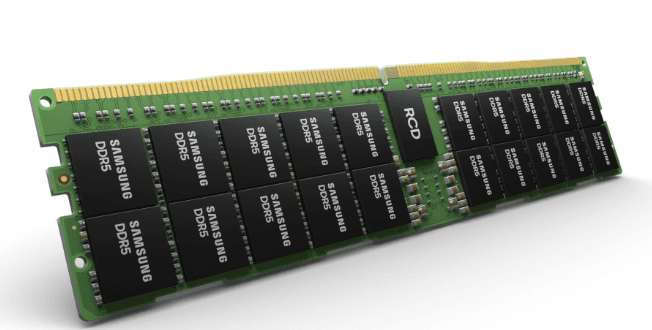
A memory chip is essentially an integrated circuit (IC), a crucial electronic component used to store, retrieve, and manage data in digital devices. It’s like the brain’s short-term and long-term memory. These chips come in various types and configurations, each tailored for specific uses in electronic systems. They are crucial to device performance because they enable fast access to the central processing unit (CPU). These chips are the foundation of our digital world, facilitating the storage and retrieval of information in devices ranging from smartphones and laptops to complex servers and embedded systems.
II. How Do Memory Chips Work?
Memory chips use tiny circuits (called memory cells) composed of transistors and capacitors to store binary data (1s and 0s).
Capacitor: A tiny container that can hold an electrical charge. A charge represents a “1,” and an absence represents a “0.”
Transistor: Acts as a switch, allowing the chip to read or change the state of the capacitor.
Volatile memory: Memory like DRAM requires a constant power source to maintain its charge. Without power, the capacitor leaks charge, resulting in data loss.
Non-volatile memory: Memory like flash memory can retain data without a power source by trapping electrons in a floating gate.
III. Commercialization of Memory Technology
Memory chips are typically developed using two main technologies: ASIC and FPGA. Each technology has its own advantages, and different applications favor one over the other.
ASIC Technology
ASICs (Application-Specific Integrated Circuits) help improve system performance by increasing processing speed, reducing production time, and meeting stringent design standards. In everyday products like smartphones, ASICs help devices run smoothly and conserve battery life.
FPGA Technology
FPGAs (Field-Programmable Gate Arrays) offer flexibility and lower costs because they can be reprogrammed in real-world applications. This makes them ideal for testing new designs and quickly adapting to changes. FPGAs are particularly useful in industries such as telecommunications and automotive, where technology is constantly evolving and systems must meet new demands.
IV. Main Types of Memory Chips
Common memory chips are primarily categorized as volatile and non-volatile, but emerging technologies are constantly emerging to meet increasing demands:
- Volatile Memory (data is lost upon power loss and focuses on high-speed temporary storage)
Random Access Memory (RAM): Serving as the “temporary workstation” of computers and electronic devices, RAM is the core medium for real-time data exchange during system operation. Its most significant features are fast read and write speeds, direct interaction with the CPU, and support for dynamic operations such as multitasking and program execution. It is one of the factors that determine a device’s immediate responsiveness.
Dynamic RAM (DRAM):
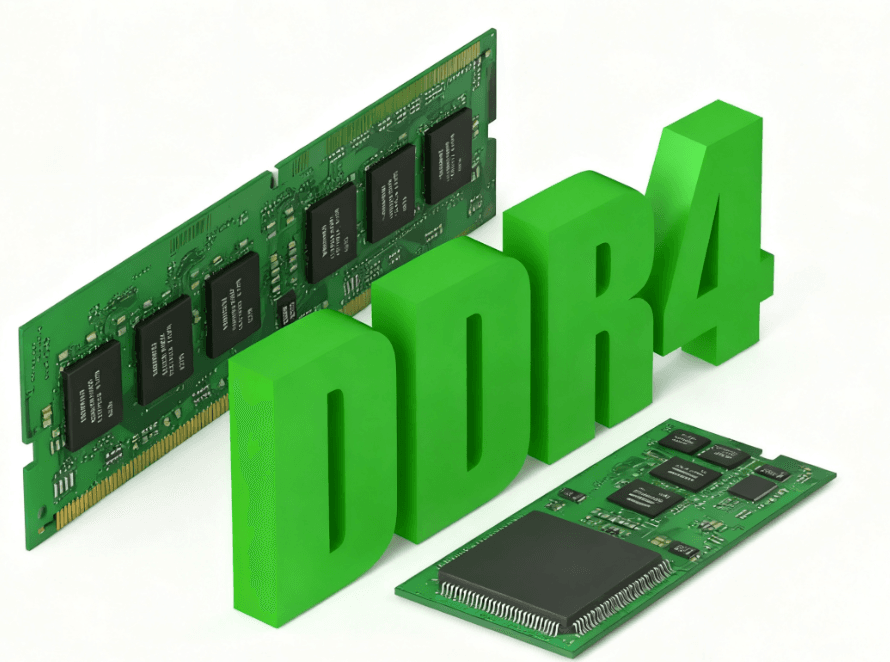
Currently the most widely used type of memory, it serves as the core main memory for PCs, servers, and laptops due to its low cost per unit capacity. It relies on capacitors to store charge, but this charge leaks over time, requiring a refresh every 64 milliseconds to maintain data. This characteristic slightly limits its speed.
With technological iterations, the DDR (double data rate) series has been continuously upgraded: from the early DDR to the current mainstream DDR5, bandwidth has increased nearly 20 times, power consumption has decreased by approximately 30%, and single memory sticks can reach up to 64GB, meeting the high-performance demands of 4K video editing, large-scale gaming, and running multiple virtual machines.
Static RAM (SRAM):
It uses flip-flop circuits (composed of six transistors) to store data without requiring a refresh, resulting in read and write speeds 3-5 times faster than DRAM, with latency as low as 1 nanosecond. However, its complex structure results in a capacity per unit area that is only 1/10 of DRAM, and a cost 5-10 times that of DRAM. Due to its high speed, it is primarily used in the CPU’s internal Level 1 (L1) and Level 2 (L2) caches, as well as in the caches of high-end routers and switches. It stores frequently accessed instructions and data, reducing reliance on main memory and significantly improving processing efficiency.
- Non-volatile Memory (data retention after power failure, focused on long-term storage)
Read-Only Memory (ROM): Chips are programmed with a fixed program at the factory and cannot be modified during normal use. It is designed to store the device’s most basic boot code (such as the BIOS). For example, when a computer boots up, the program in ROM first checks whether the hardware is functioning properly before loading the operating system, acting as the “first impulse” for the device to boot.
EEPROM (Electrically Erasable Programmable Read-Only Memory): This breaks the immutability of traditional ROM and allows data to be erased and written multiple times using electrical signals. However, each operation is performed byte by byte, resulting in slower speeds and a limited lifespan (approximately 100,000 erase/write cycles). Due to its compact size and low power consumption, it is often used to store device configuration information, such as router network parameters, printer calibration data, and initialization parameters for automotive sensors. Its capacity typically ranges from a few KB to several hundred KB.
Flash memory: An upgrade to EEPROM, it uses block erase and write technology, allowing it to operate multiple bytes at a time, increasing erase and write speeds by more than 10 times and extending its lifespan to 100,000 to 1,000,000 cycles. Its combination of non-volatility and high read and write speeds makes it a core component of mobile storage and solid-state storage.
V. What are the applications of memory chips?
Memory chips are ubiquitous, covering a wide range of applications and devices, and play a significant role in their functionality:
- Computers and laptops: RAM enables fast data access during computing, while ROM stores the firmware and BIOS instructions required for system startup.
- Smartphones and tablets: The memory chips in these devices store data for applications, media files, and the operating system, ensuring smooth multitasking and a smooth user experience.
- Digital cameras and camcorders: These devices use memory chips to store photos, videos, and settings, allowing users to capture and preserve precious moments.
- Embedded systems and IoT devices: Memory chips power embedded systems and IoT devices, managing data critical to operations across industries such as healthcare, automotive, and home automation.
VI. Who are the top memory chip manufacturers?
The memory market is dominated by several key players:
- Samsung Electronics (South Korea): A leader in the DRAM and NAND flash memory markets, with products including DRAM, SSDs, and various storage solutions.
- SK Hynix (South Korea): Another major supplier in the DRAM and NAND markets, offering products such as DRAM, NAND flash memory, and CMOS image sensors.
- Micron Technology (US): A major memory manufacturer that owns the consumer brand Crucial and provides a wide range of memory and storage solutions.
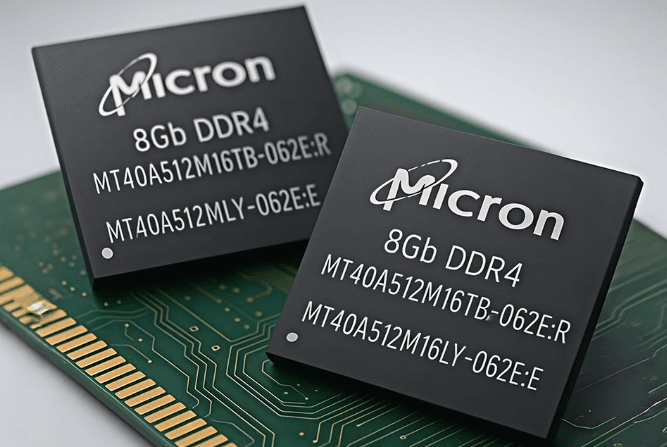
- Kioxia (Japan): Specializes in flash memory solutions and is a leading NAND flash supplier.
- Western Digital (US): A major player in the flash memory and storage market, with products including SSDs, HDDs, and various storage devices.
- Nanya Technology (Taiwan): Specializes in DRAM chip manufacturing, with products including standard DRAM and low-power DRAM.
- Winbond Electronics (Taiwan): A specialized memory integrated circuit company, providing code storage flash memory, specialized DRAM, and mobile DRAM.
- Intel (US): Once a major player in the NAND flash memory market, its flash memory business has been acquired, but it still offers related memory and storage products.
- STMicroelectronics (Europe): A major European semiconductor company, it provides memory, secure microcontrollers, and various semiconductor solutions.
- Cypress Semiconductor (US): Provides NOR flash memory, SRAM, and various storage and connectivity solutions.
A comprehensive overview of memory chips reveals that they are not a single component, but rather a “data management system” adapted to diverse needs. Utilizing ASIC and FPGA technologies, they balance performance and flexibility, covering both temporary computing and long-term storage with both volatile and non-volatile memory. These chips penetrate diverse scenarios, including computers, mobile phones, and the Internet of Things, becoming a bridge connecting digital devices with user needs.
At the market level, the joint efforts of international giants and local manufacturers have not only driven the evolution of technologies like DDR5 and new flash memory, but also enabled storage solutions to better meet the needs of various industries. Whether it’s the thinner and lighter demands of consumer electronics or the high stability standards of industrial equipment, selecting the right memory chip is a crucial step in product implementation.
With years of experience in the electronic components industry, our team at 7Setronic continuously monitors technological trends and market demand for various memory chips. From mainstream DRAM and flash memory to customized storage solutions for specialized scenarios, we provide industry-standard supply support, enabling partners in diverse sectors to quickly respond to product R&D and production needs. As AI and edge computing drive growing demands for storage speed and capacity, innovation in memory chips continues to shape the electronics landscape. At 7Setronic, we ensure reliable supply capabilities and stable support for our partners, helping them navigate technological evolution and seize opportunities presented by the digital transformation.
View more BLOGS you may be interested as below: