
For small-scale production, choosing the right microcontroller is less about chasing the most advanced specs and more about balancing functionality, cost, supply stability, and long-term availability. A well-matched MCU can shorten development cycles, stabilize BOM cost, and reduce production risk, especially for overseas small and medium-sized factories.
This guide explains how to evaluate and select a microcontroller for small-batch and scalable production, using practical engineering and sourcing considerations rather than theory alone.
Understanding Small-Scale Production Requirements
Small-scale production environments usually share several characteristics:
- Limited engineering resources
- Tight BOM cost control
- Shorter product life cycles
- Higher sensitivity to component shortages
Unlike high-volume consumer electronics, MCU selection here must consider procurement reality as much as technical capability.
Core Factors When Choosing a Microcontroller
1. Processing Performance vs Real Application Needs
Many designs fail because engineers overestimate computing needs.
Key parameters to evaluate:
- Core type (8-bit, 16-bit, 32-bit)
- Clock frequency
- Instruction efficiency
For example:
- Simple control logic, sensors, or relay control often run reliably on 8-bit or low-end 32-bit MCUs.
- Data processing, connectivity, or UI handling usually requires 32-bit MCUs.
Over-specifying increases cost, power consumption, and sourcing difficulty without real benefit.
2. Memory Size: Flash and RAM Balance
Memory planning should leave reasonable margin, not excessive headroom.
| Application Type | Typical Flash | Typical RAM |
|---|---|---|
| Basic control | 16–64 KB | 1–4 KB |
| Industrial I/O | 64–128 KB | 8–16 KB |
| Connectivity | 128–512 KB | 32–128 KB |
MCUs with insufficient RAM cause late-stage firmware issues, while oversized memory increases unit cost unnecessarily.
3. Peripheral Compatibility and Pin Availability
Always map peripherals early:
- UART, SPI, I²C count
- ADC resolution and channels
- PWM outputs
- GPIO flexibility
Pin-limited packages often restrict future revisions. For small-scale production, selecting an MCU with a few spare peripherals reduces redesign risk.
4. Package Type and Assembly Constraints
Your PCB assembly capability matters more than datasheets admit.
- QFN and TQFP packages are generally safer for small factories
- BGA packages raise yield and inspection challenges
- Pin compatibility across package options simplifies redesigns
Choosing a widely supported package reduces manufacturing friction and rework cost.
Supply Chain Stability: The Often-Ignored Risk
5. MCU Availability and Lifecycle
For small-batch production, availability is as critical as price.
Check:
- Manufacturer lifecycle status
- Lead time stability
- Second-source or pin-compatible alternatives
MCUs with long-term supply commitments reduce redesign frequency and inventory pressure.
6. Price Volatility and MOQ Flexibility
Small factories are more exposed to:
- Sudden MCU price increases
- Distributor MOQ constraints
- Allocation policies during shortages
Selecting MCUs with broad distributor support improves price transparency and procurement flexibility.
This is where working with experienced component suppliers like 7setronic helps balance engineering choice with real market availability.
Development Ecosystem and Support
7. Toolchain and Documentation Quality
A mature ecosystem saves engineering time:
- Stable IDEs
- Clear reference manuals
- Example code and libraries
For small teams, development efficiency often outweighs marginal hardware performance gains.
For small-batch and scalable production, MCU architecture consistency is critical. ARM Cortex-M microcontrollers offer a vendor-agnostic core platform, enabling manufacturers to switch between suppliers within the same ecosystem when availability or pricing changes. ARM’s official Cortex-M overview outlines the architecture and its positioning across embedded applications.
8. Firmware Migration and Scalability
Consider future upgrades:
- Pin-compatible higher-performance variants
- Same family expansion options
- Software reuse across models
This approach protects early investment and supports gradual product evolution.
Practical MCU Selection Workflow
- Define functional and performance requirements
- Lock memory and peripheral needs
- Filter by package and assembly capability
- Validate availability and lifecycle status
- Compare cost stability and sourcing options
- Confirm ecosystem maturity
Skipping any step usually results in higher downstream cost.
Real-World Case Insight
A small European industrial controller manufacturer initially selected a high-end MCU to “future-proof” the design. After six months, lead times exceeded 40 weeks and pricing doubled. The redesign to a mid-range, widely available MCU reduced unit cost by 18% and stabilized supply within two production cycles.
How 7setronic Supports MCU Selection and Sourcing
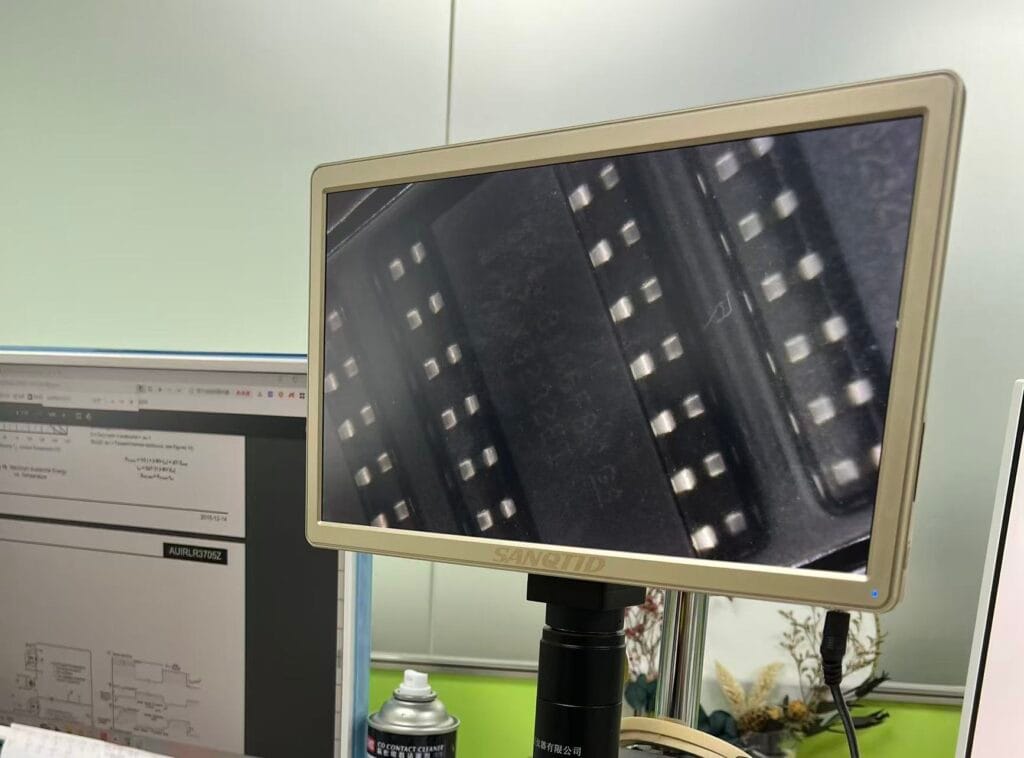
At 7setronic, we support overseas small and medium factories by:
- Verifying MCU availability before design lock
- Recommending stable, production-friendly alternatives
- Supporting small-batch and scalable procurement
If you are evaluating MCU options for a new project or redesign, sharing your application details allows us to assist with practical, supply-aware recommendations and competitive quotations.
Conclusion
Choosing the right microcontroller for small-scale production is a strategic decision, not a purely technical one. By aligning performance needs with supply stability, package practicality, and ecosystem maturity, manufacturers can reduce risk, control cost, and improve time-to-market.
A thoughtful MCU selection today avoids expensive compromises tomorrow.
FAQ
Q1: Is a 32-bit MCU always better than 8-bit?
No. Many control applications run more efficiently and cheaply on 8-bit MCUs.
Q2: How much memory margin should I leave?
Typically 20–30% Flash and RAM headroom is sufficient for future updates.
Q3: Should availability influence MCU choice early?
Yes. Early availability checks prevent costly redesigns later.
View more insight: