
With the rise of local AI agents like OpenClaw, the previously relatively niche Mac mini M4, this palm-sized Apple desktop computer, has unexpectedly become a hot topic. In this wave of local deployment, it quickly became one of the most talked-about hardware devices, with soaring discussion and even selling out at one point.
According to media reports on March 9th, Apple’s official channel delivery time has now extended to more than two weeks, with some configurations even having a waiting list until the end of March; major domestic e-commerce platforms are also experiencing stock shortages. Sales of the Mac mini M4 have exploded since mid-February, with Apple’s direct stores and authorized resellers in many parts of the world running out of stock, and secondhand market prices rising accordingly. Previously priced as low as around 2800 yuan, the current transaction price for a secondhand Mac mini M4 has generally climbed to around 4000 yuan.
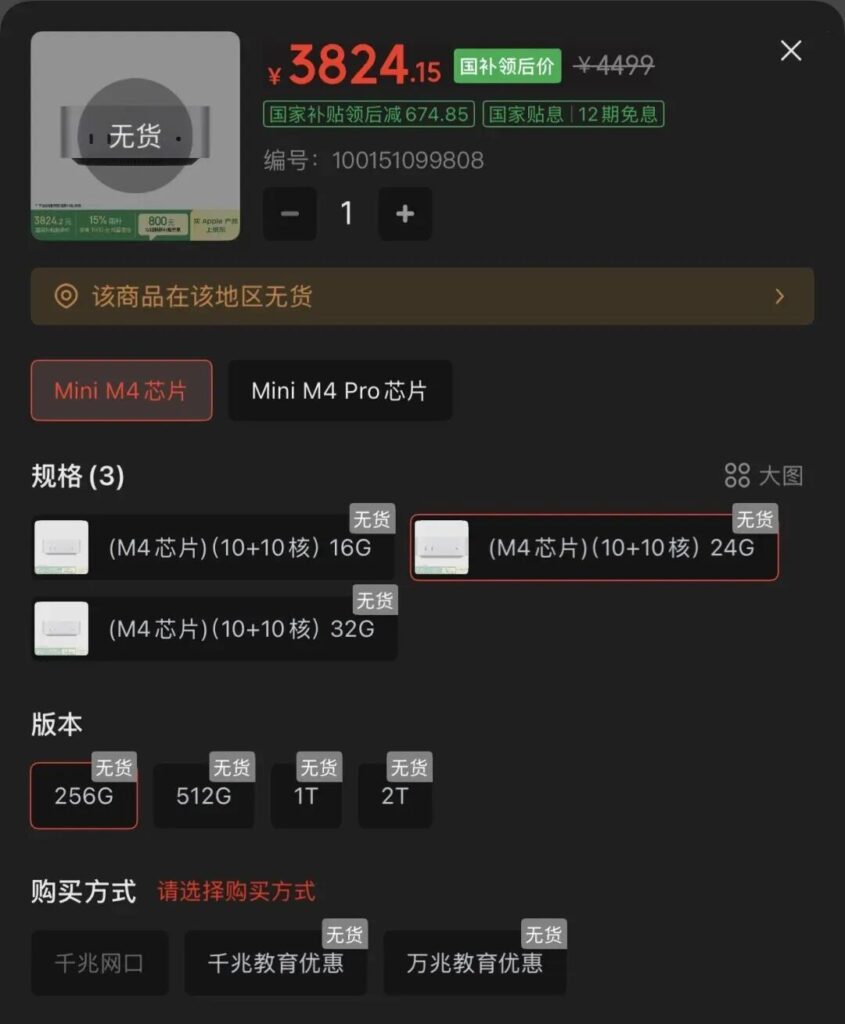
Source: Jiemian News
Read this article to learn: How did OpenClaw make the Mac mini so popular? Why do people prefer it? And what chips are used behind this desktop computer?
How did it become so popular, and why specifically the Mac mini?
In December 2025, Peter Steinberg, the developer of OpenClaw, open-sourced the project’s code on GitHub. With its imaginative positioning of “making AI truly work on your computer,” it quickly ignited the enthusiasm of developers worldwide: within just a few days, the project’s star count surpassed 60,000, and within three months it soared to 260,000, setting a record for phenomenal growth.
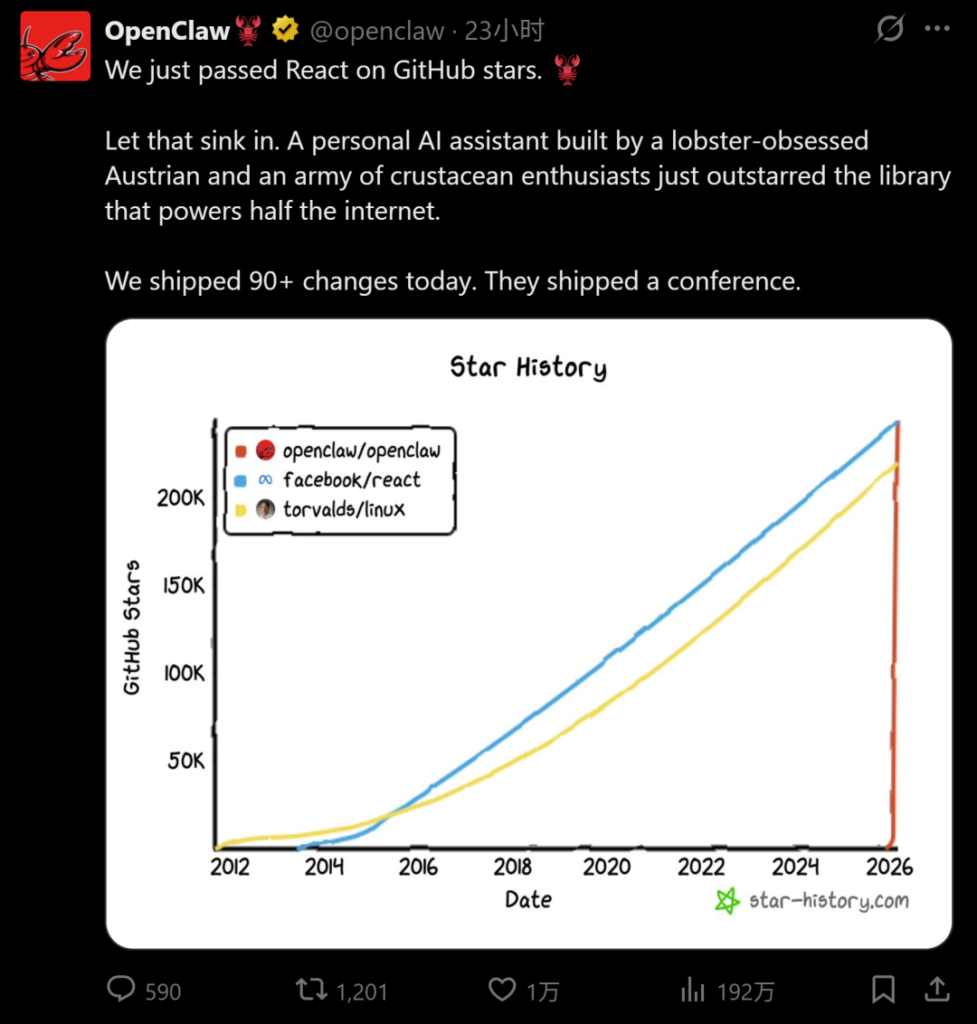
Source: X
This buzz quickly spread beyond the developer and tech circles, further attracting widespread attention and participation from ordinary users.
On X (formerly Twitter), photos of multiple Mac minis stacked together went viral, accompanied by the excitement characteristic of the early stages of a new technology wave: “My home AI computing center is online!” “Future CEO and his employees.” Some even stated, “Invest in the brain, starting with investing in hardware.” Meanwhile, tech bloggers worked overnight to create “Complete Guide to Building a Mac mini AI Server,” and a large number of tutorial videos quickly appeared on YouTube.

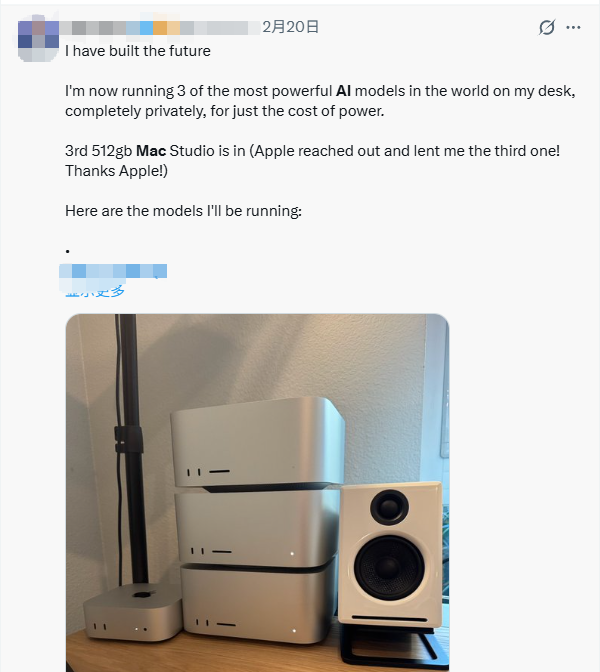
Running four OpenClaws instances on three Mac Studios and one Mac Mini. Source: X. By January 2026, Mac mini sales had already surged significantly due to the OpenClaw craze, with some high-end versions experiencing supply shortages. The hype intensified further in February. Third-party data shows that Mac mini sales have recently surged by 300%, driven by this “lobster craze.” This momentum has continued, with increased discussion, inventory shortages, and extended shipping times, making the Mac mini one of the most popular deployment platforms for OpenClaw.
Currently, mainstream OpenClaw deployment solutions can be broadly categorized into four types: dedicated local hardware, typically represented by the Mac mini; direct installation on a personal computer; deployment on cloud servers (VPS) such as Tencent Cloud and Alibaba Cloud; and managed products provided by model vendors.
Among these, direct installation on a personal computer consumes the most resources of the primary device and carries the highest risk; cloud server deployment lacks local files and desktop context, limiting capabilities; managed products from model vendors have a lower barrier to entry, but their capabilities are often limited by the platform. In contrast, dedicated local hardware retains the local environment while ensuring “dedicated use.”
OpenClaw is known as “your first AI employee.” To keep it running online long-term, many users prepare a dedicated device. For these local AI tools, users value not only performance but also long-term availability, ease of deployment, quiet and stable operation, and isolation from their primary work computer.
The Mac mini is perfectly suited to meet these needs. Since its debut in 2005, the Mac mini has been positioned by Apple as a compact, entry-level, and relatively affordable desktop Mac, and is known as “the cheapest and most compact Mac.”
Today, the Mac mini M4 is favored for four main reasons:
First, its relatively low barrier to entry makes it suitable for users who want to try local AI but don’t want a large upfront investment.
Second, it’s suitable for long-term operation; its small size, low power consumption, and low noise naturally align with the idea of ”dedicatedly running a machine for extended periods.”
Third, the configuration of this generation of M4 processors is naturally easy to link with AI narratives. The base model comes equipped with the Apple M4 chip and 16GB of unified memory, and the unified memory architecture is more suitable for AI tasks involving multiple components working together.
Fourth, the “dedicated machine” usage logic is appealing. Many users are unwilling to deploy high-privilege AI agents directly on their main computer; a small, self-contained, and affordable desktop is more readily accepted.
More importantly, despite rising storage prices, Apple hasn’t significantly increased the price of the Mac mini M4. The base model is priced at approximately $549-$599 overseas. At this price point, it’s difficult to find other devices that offer local AI computing power and energy efficiency while also considering size, power consumption, and deployment convenience.
This is precisely why the Mac mini, a small desktop computer that wasn’t originally the most prominent, has been thrust back into the spotlight amidst the current wave of local AI development.
What chips are used inside?
Returning to the hardware, according to iFixit’s teardown of the Mac mini M4 (2024), the core of this machine includes the Apple M4 main chip, Micron LPDDR5 memory, SanDisk NAND flash memory, as well as a Broadcom Gigabit Ethernet controller, a USI wireless module, and power supply, interface, and peripheral components from TI, ADI, Renesas, Onsemi, Winbond, GigaDevice, Genesys, and others.
Specifically, let’s look at the chips used in the Mac mini M4: Motherboard (First Side)
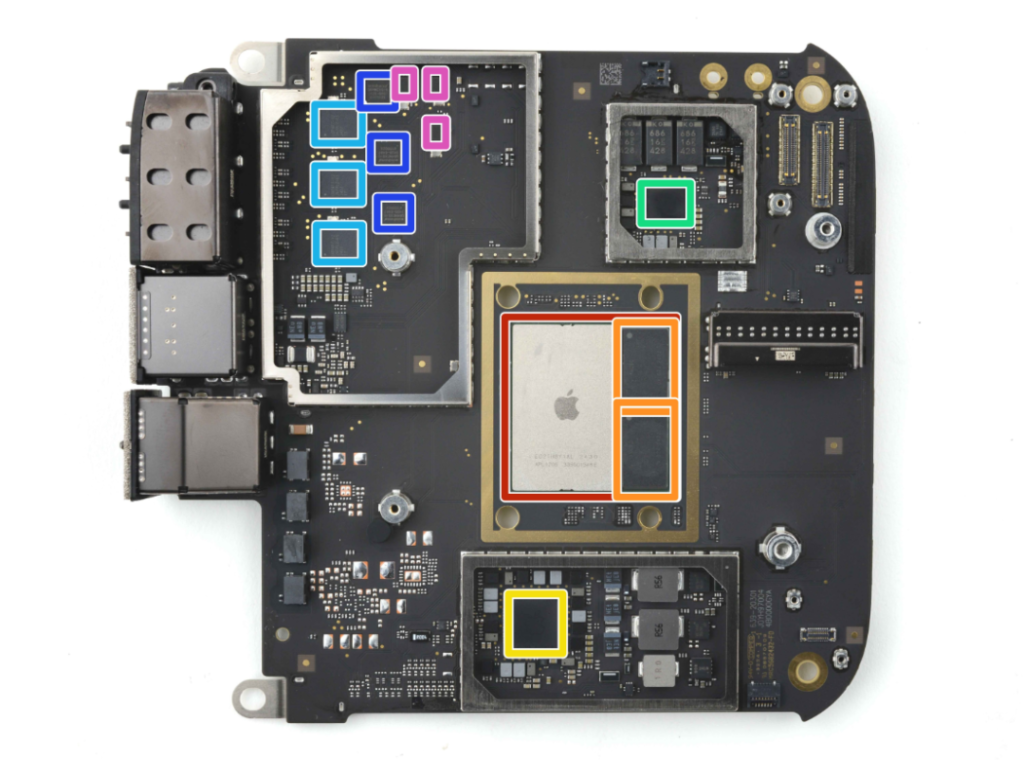
- Red: Apple APL1206/339S01548 E M4 deca-core application processor, equipped with GPU
- Orange: Micron MT62F1G64D4AS-026 XT: C 8GB LPDDR5 SDRAM memory
- Yellow: Apple APL1066/343S00710 power management chip
- Green: Apple APL1067/343S00683?
- Light blue power management chip: Possibly Apple U0P4F7-Y2 Thunderbolt 4 controller;
- Dark blue: Winbond W25Q64NE 8MB serial NOR flash memory;
- Purple: Possibly Infineon CYUSB2408 USB level converter.
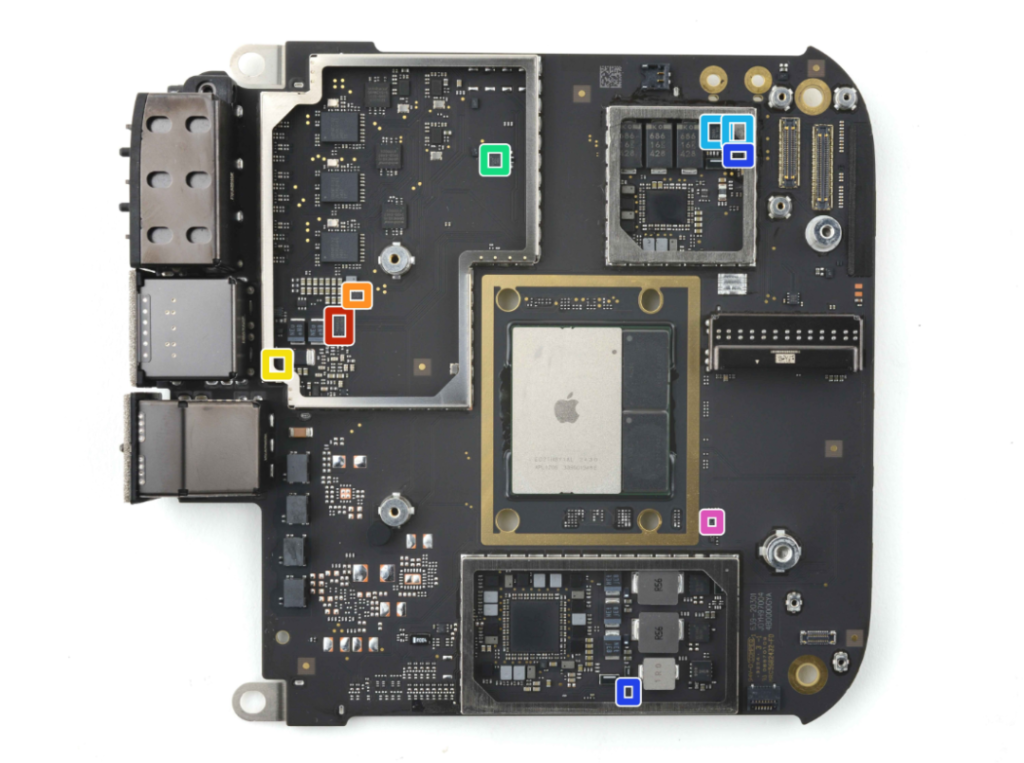
Motherboard First Side
- Red: Winbond W25X40CL 4Mb serial NOR flash memory;
- Orange: Texas Instruments TPS628502 2A/adjustable buck converter;
- Yellow: ADI DC-DC converter;
- Green: Texas Instruments TPS715A01 80mA/adjustable LDO regulator;
- Light blue: Texas Instruments TPS2559 power distribution switch;
- Dark blue: Texas Instruments INA190A2 bidirectional current sense amplifier;
- Purple: Texas Instruments TLV7021 single-channel comparator.
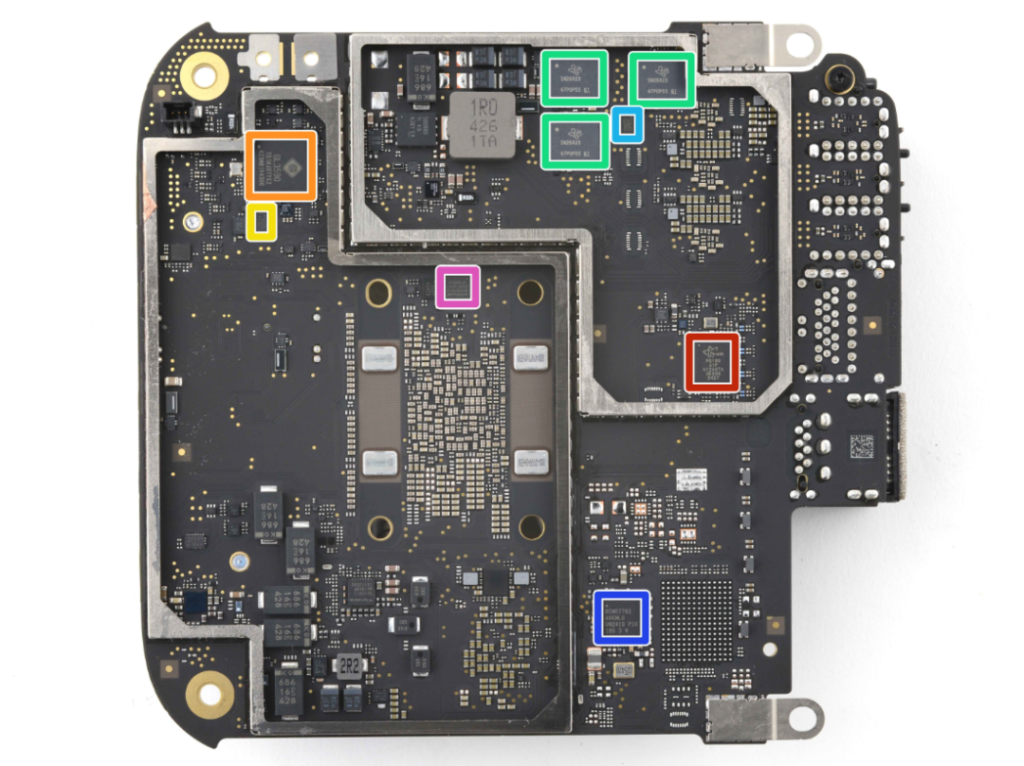
- Red: Possibly Parade Technologies PS190 DisplayPort to HDMI converter;
- Orange: Genesys Logic GL3590-TBYS2 3-port USB Type-C SuperSpeed+ and 3-port USB… Type-A SuperSpeed+ Hub Controller:
- Yellow: Macronix MX25V2035FZUI 2Mb Serial NOR Flash;
- Green: Texas Instruments SN26A23 USB Type-C Controller;
- Light Blue: GigaDevice GD25Q80E 1MB Serial NOR Flash;
- Dark Blue: Broadcom BCM57762 Gigabit Ethernet Controller;
- Purple: Winbond W25Q64NE 8MB Serial NOR Flash
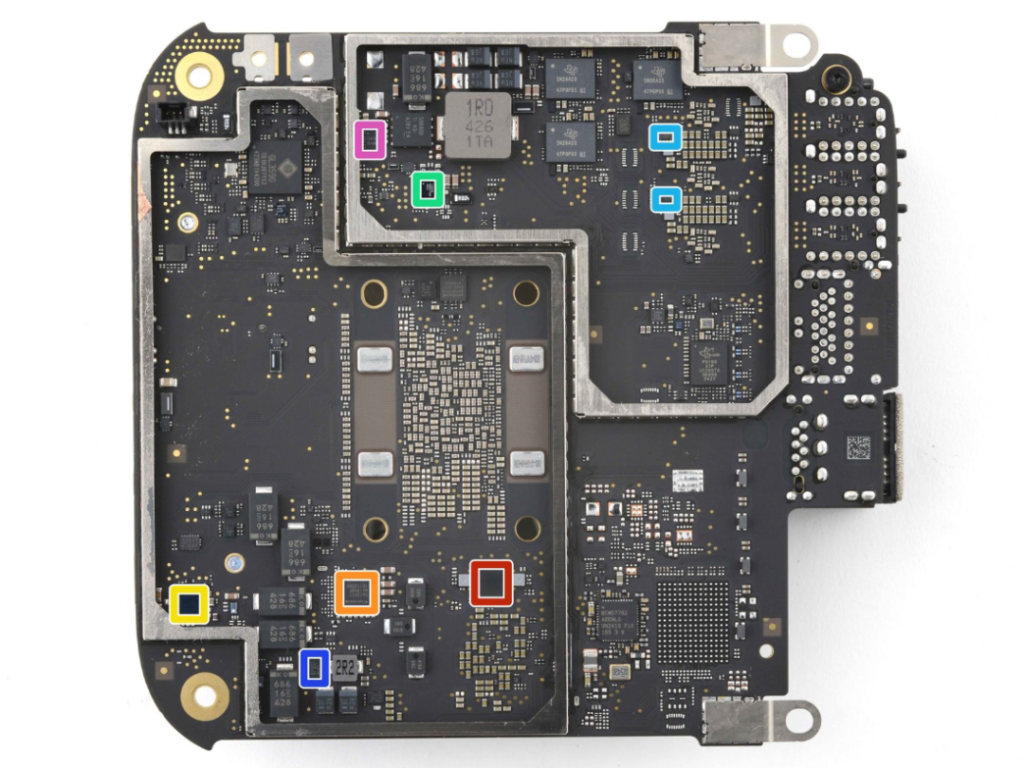
- Red: Apple APL5791/343S00709 Power Management Chip;
- Orange: Renesas Multiphase Controller;
- Yellow: Cirrus Logic CS42L84A Audio Codec;
- Green: Texas Instruments SN012776B0 Audio Amplifier;
- Light Blue: Texas Instruments TPS628502 2A / Adjustable Buck Converter;
- Dark Blue: Texas Instruments TPS621371 Buck Converter;
- Purple: Possibly Renesas PWM DC-DC Converter Controller
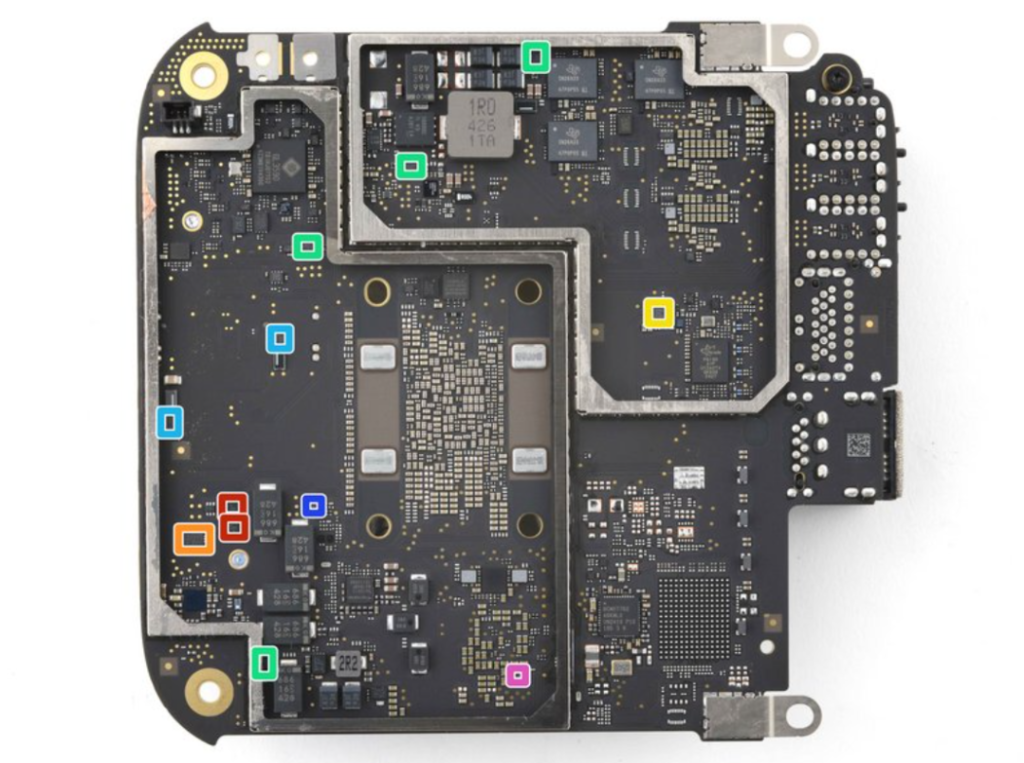
- Red: Onsemi NCP380LMU05AATBG Power Distribution Switch;
- Orange: Possibly Renesas Mixed Signal Array;
- Green: Texas Instruments TLV75801P 500mA/Adjustable LDO Regulator;
- Light Blue: Texas Instruments INA190A2 Bidirectional Current Sensing Amplifier;
- Dark Blue: Texas Instruments INA190A3 Bidirectional Current Sensing Amplifier;
- Yellow: Texas Instruments TLV7011 Single-Channel Comparator;
- Purple: Texas Instruments TLV9051 Single-Channel Operational Amplifier
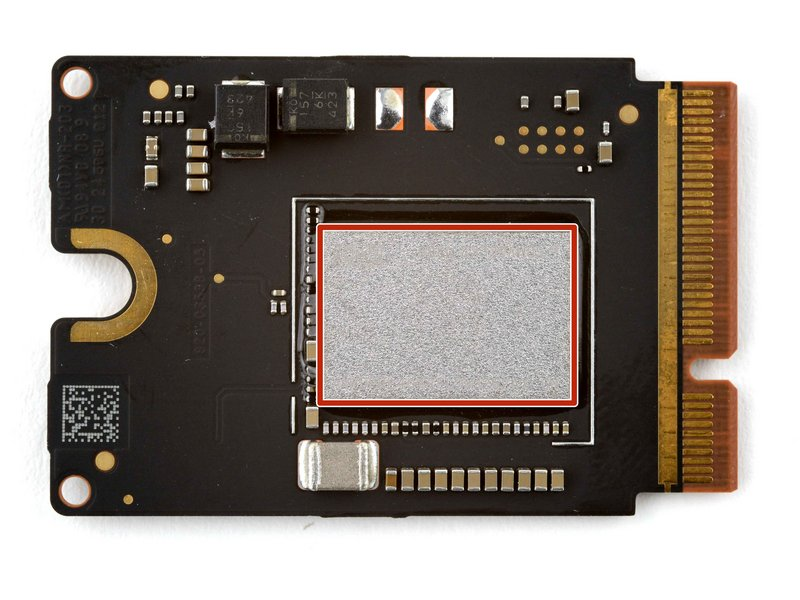
Red: SanDisk SDMVGKLK2 128GB NAND Flash Memory
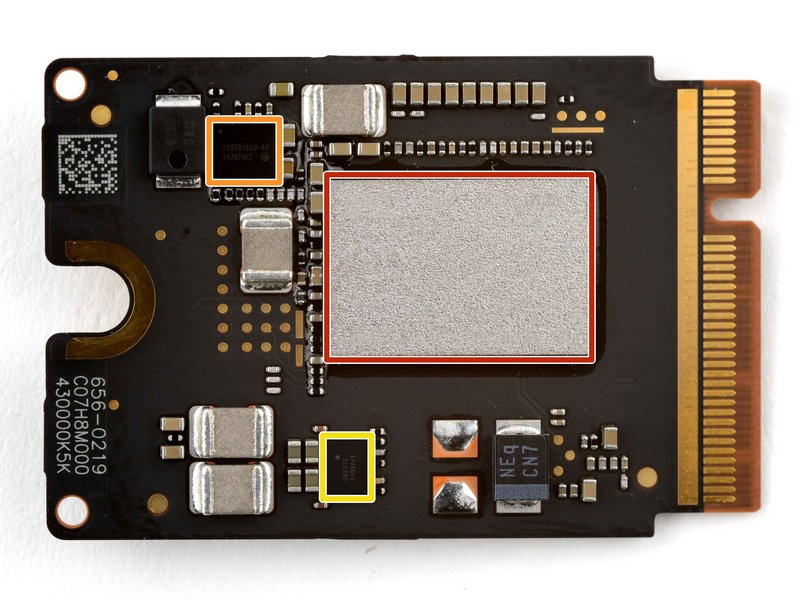
- Red: SanDisk SDMVGKLK2 128GB NAND Flash Memory;
- Orange: Apple 338S00600-A0 Power Management Chip;
- Yellow: Texas Instruments TPS62180 6A Synchronous Buck Converter
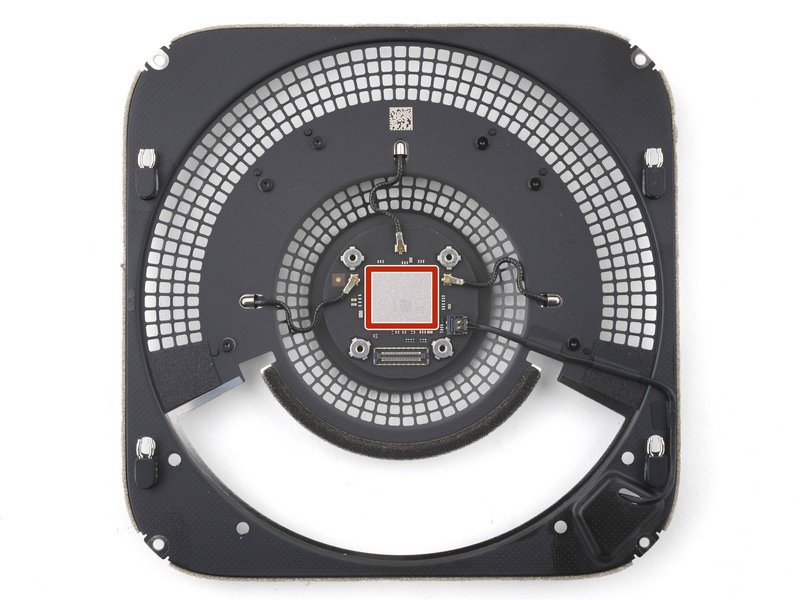
Red: Possibly USI 339S01162 Bluetooth and WiFi Module
Conclusion
The rise of OpenClaw reflects a growing interest in local AI deployment. As more developers experiment with running AI agents on dedicated hardware, devices like the Mac mini M4 have quickly become popular thanks to their compact size, energy efficiency, and stable performance.
Behind this small system is a wide ecosystem of semiconductor components, including memory, NAND flash, power management ICs, and interface chips from multiple suppliers.
For manufacturers and engineering teams working on similar hardware platforms, reliable component sourcing is essential. 7SEtronic supports overseas factories with sourcing and quotation services for components such as NOR flash, power management ICs, and memory devices used in modern computing systems.
FAQ
What is OpenClaw used for?
OpenClaw is an open-source AI agent designed to run locally on computers and automate tasks such as file operations, workflow execution, and AI-assisted processes.
Why is Mac mini popular for local AI deployment?
Mac mini offers compact size, low power consumption, and unified memory architecture, making it suitable for running local AI agents continuously.
What types of chips are used inside the Mac mini M4?
The Mac mini M4 includes chips such as Apple M4 processors, Micron LPDDR5 memory, SanDisk NAND flash, and power management and interface ICs from multiple semiconductor vendors.