
Overview
The STM32F103ZET6 is a 32-bit ARM Cortex-M3 microcontroller designed for embedded control and real-time processing applications. It is widely used in industrial automation, consumer electronics, and communication equipment, where high performance, rich peripherals, and cost efficiency are required.
Belonging to STMicroelectronics’ well-established STM32F1 series, this device is known for its stability, long lifecycle support, and broad ecosystem.
Core Parameters
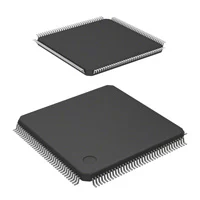
| Parameter | Specification |
|---|---|
| Core | ARM Cortex-M3 |
| Maximum CPU Frequency | Up to 72 MHz |
| Flash Memory | 512 KB |
| SRAM | 64 KB |
| Operating Voltage | 2.0 V – 3.6 V |
| GPIO Pins | Up to 80 |
| Communication Interfaces | USART, SPI, I²C, CAN, USB |
| Memory Interface | FSMC (supports NAND/NOR/SRAM) |
| Package | LQFP-144 |
| Operating Temperature | -40°C to +85°C |
These parameters make the device suitable for complex embedded control systems, especially where multiple peripherals and external memory expansion are critical.
Features
- ARM Cortex-M3 core with deterministic interrupt response
- Flexible Static Memory Controller (FSMC) for external memory
- Rich set of communication interfaces
- Multiple timers for motor control and real-time tasks
- Low power consumption with multiple power-saving modes
- Extensive STM32 development ecosystem and software libraries
Typical Application Scenarios
- Industrial controllers and PLC subsystems
- Embedded systems with external NAND or NOR Flash
- Smart instrumentation and data acquisition
- Consumer electronics control boards
- Networking and communication gateways
The STM32F103ZET6 is commonly paired with external NAND Flash devices such as the K9F2G08U0C-SCB0, using its built-in FSMC interface for efficient data storage and management. This combination is widely adopted in embedded systems requiring reliable non-volatile memory for firmware, file systems, and data logging applications.
Performance Comparison
Compared with 8-bit and 16-bit microcontrollers, the STM32F103ZET6 offers:
- Higher processing performance
- Larger addressable memory space
- More advanced peripheral integration
Compared with higher-end STM32 series (F4/F7), it provides:
- Lower cost and power consumption
- Sufficient performance for mid-range applications
- Easier certification and long-term supply stability
This balance makes it a popular choice for mature and cost-sensitive designs.
Conclusion
The STM32F103ZET6 remains a reliable and widely adopted microcontroller for embedded systems requiring stable performance, rich connectivity, and external memory support. Its proven architecture and strong ecosystem make it suitable for both new designs and long-term maintenance projects.
Manufacturer Profile

STMicroelectronics is a global semiconductor leader specializing in microcontrollers, power devices, sensors, and analog ICs. The STM32 family is one of the most widely used MCU platforms worldwide, trusted across industrial, automotive, and consumer markets.
FAQ
Q1: Is STM32F103ZET6 suitable for industrial applications?
Yes. Its wide operating temperature range and robust peripheral set make it suitable for industrial control and automation systems.
Q2: Can STM32F103ZET6 interface with external NAND Flash?
Yes. The built-in FSMC supports NAND Flash, NOR Flash, and SRAM, enabling easy expansion of external memory.
Q3: Is STM32F103ZET6 still recommended for new designs?
It is still widely used in mature designs, legacy upgrades, and applications that value long-term availability and stability.
Q4: How can I verify the quality of this part when purchasing?
7SEtronic follows a complete and standardized quality inspection SOP, including label verification, visual inspection, dimensional checks, X-ray inspection, and electrical testing, ensuring product authenticity and reliability.
For more information and to review our available inventory, please contact our team for detailed pricing, current stock levels, and any additional technical support you may need.
You can find more component guides and application notes in our Component Technical Guides section: