
Overview
The OPA2182IDGKR is a dual zero-drift operational amplifier designed for high-accuracy, low-noise analog signal processing. It offers exceptional DC precision with ±0.45 µV typical offset voltage, 0.003 µV/°C typical drift, and 5.7 nV/√Hz noise density, making it ideal for data acquisition, instrumentation, and precision sensing applications. With a wide supply range of 4.5 V to 36 V, rail-to-rail output, and fast settling suitable for multiplexed systems, the device supports both single-supply and dual-supply architectures.
Core Parameters
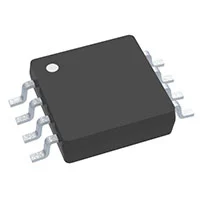
| Parameter | Specification |
|---|---|
| Channels | Dual op-amp |
| Supply Voltage Range | 4.5 V to 36 V |
| Input Offset Voltage | ±0.45 µV typical, ±4 µV max |
| Offset Drift | 0.003 µV/°C typical, 0.012 µV/°C max |
| Noise Density | 5.7 nV/√Hz at 1 kHz |
| Input Bias Current | 50 pA typical |
| Gain Bandwidth Product | 5 MHz |
| Slew Rate | 10 V/µs |
| Output | Rail-to-rail |
| Operating Temperature | –40°C to +125°C |
| Package | VSSOP-8 (DGK) |
Features
- Zero-drift architecture for ultra-stable precision over temperature
- Extremely low offset and drift enable accurate long-term measurements
- Low noise (5.7 nV/√Hz) for sensitive analog front-ends
- Wide 4.5 V–36 V supply supports industrial and high-voltage modules
- Rail-to-rail output improves dynamic range in single-supply systems
- MUX-friendly input stage reduces errors when switching channels
- 10 V/µs slew rate and 5 MHz bandwidth balance speed and precision
- Low input bias current supports high-impedance sensors and transducers
Typical Application Scenarios
| Application | Reason to Use OPA2182IDGKR |
|---|---|
| Data Acquisition Systems | Zero-drift accuracy ensures stable low-level signal capture |
| Sensor Signal Conditioning | Low bias current and low noise ideal for pressure, strain, and temperature sensors |
| Instrumentation & Test Equipment | High precision and low drift support long-term measurement stability |
| Industrial Analog Input Modules | Wide supply voltage and rail-to-rail output fit 24 V industrial systems |
| Multiplexed Analog Front-Ends | MUX-friendly architecture improves channel-to-channel settling |
| Weigh Scales & Load Cells | Ultra-low offset and drift ensure microvolt-level measurement resolution |
Performance Comparison
| Feature | OPA2182IDGKR | Standard Precision Op-Amp | Zero-Drift Competitor |
|---|---|---|---|
| Offset Voltage | ±0.45 µV typ | 50–500 µV | 1–10 µV |
| Drift | 0.003 µV/°C typ | 1–10 µV/°C | 0.03–0.3 µV/°C |
| Noise | 5.7 nV/√Hz | 10–20 nV/√Hz | 5–10 nV/√Hz |
| Supply Voltage | 4.5–36 V | 2.7–36 V | 2.7–36 V |
| Slew Rate | 10 V/µs | 1–5 V/µs | 2–10 V/µs |
The OPA2182IDGKR ranks at the top in offset, drift, and low-noise precision, making it highly competitive for professional-grade analog designs.
Conclusion
The OPA2182IDGKR delivers outstanding precision with ultra-low offset, minimal drift, and low noise performance. Combined with a wide supply range, rail-to-rail output, and compatibility with multiplexed inputs, it is a strong choice for industrial measurement systems, instrumentation, and high-accuracy embedded designs requiring long-term stability and microvolt-level sensitivity.
Manufacturer Profile

The OPA2182IDGKR is produced by Texas Instruments (TI), a global leader in high-performance analog technology. TI’s precision amplifier family is known for exceptional DC accuracy, robust reliability, and broad support for industrial, instrumentation, and sensing applications.
For more information and to review our available inventory, please contact our team for detailed pricing, current stock levels, and any additional technical support you may need.
View more BLOGS you may be interested as below: