
Overview
The TPS61023DRLR is a high-efficiency synchronous boost converter designed for battery-powered and low-voltage step-up power applications. It is widely used in portable consumer electronics, IoT devices, and low-power embedded systems, where high conversion efficiency, small solution size, and stable output voltage are required. The TPS61023DRLT shares the same electrical characteristics but is supplied in a different tape-and-reel packaging option for high-volume production.
Core Parameters
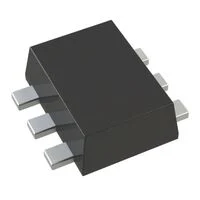
| Parameter | Specification |
|---|---|
| Input Voltage Range | 0.8 V to 5.5 V |
| Output Voltage | Adjustable up to 5.5 V |
| Switching Frequency | ~1 MHz |
| Maximum Output Current | Up to 1 A (depending on VIN/VOUT) |
| Efficiency | Up to 95% |
| Control Architecture | Synchronous boost |
| Package | DRL (VSON) |
| Operating Temperature | –40 °C to +125 °C |
These parameters make the device suitable for single-cell battery boost applications, especially where low input voltage startup and high efficiency are critical.
Features
- Ultra-low input voltage operation down to 0.8 V
- High efficiency synchronous rectification
- Fixed high switching frequency for small external components
- Integrated power MOSFETs to reduce BOM count
- Fast transient response for dynamic loads
- Packaging flexibility with TPS61023DRLR and TPS61023DRLT options
Typical Application Scenarios
- Single-cell alkaline or NiMH battery systems
- Portable consumer electronics
- IoT sensor nodes and wireless modules
- Backup power rails for embedded controllers
- Energy-harvesting assisted power designs
In battery-powered designs using the TPS61023DRLR boost converter, the TPS22918DBVR load switch is often paired to control downstream power rails. It enables clean power sequencing, reduces inrush current, and improves overall system reliability, making it a practical companion device in portable and IoT applications.
Performance Comparison
| Feature | TPS61023DRLR | Asynchronous Boost Converters | LDO Regulators |
|---|---|---|---|
| Efficiency | Very High (up to 95%) | Medium | Low |
| Low-Voltage Startup | Yes (0.8 V) | Limited | No |
| Output Power Capability | High | Medium | Low |
| External Components | Few | More | Few |
| Battery Utilization | Excellent | Moderate | Poor |
Compared with traditional boost or linear regulators, TPS61023DRLR delivers superior efficiency and extended battery life, particularly in low-voltage input conditions.
Conclusion
The TPS61023DRLR provides an efficient, compact, and reliable boost conversion solution for modern low-power systems. Its ability to start from very low input voltages, combined with high efficiency and minimal external components, makes it an excellent choice for portable and battery-driven designs. The TPS61023DRLT offers identical performance while supporting automated, high-volume manufacturing.
Manufacturer Profile

Texas Instruments (TI) is a global leader in power management and analog semiconductor solutions. TI’s boost converters, including the TPS61023 series, are widely adopted across consumer, industrial, and embedded markets for their reliability, performance consistency, and long-term availability.
FAQ
Q1: What is the main advantage of TPS61023DRLR in battery-powered designs?
A: Its ability to operate from input voltages as low as 0.8 V while maintaining high efficiency helps maximize battery utilization and system runtime.
Q2: Is TPS61023DRLT electrically different from TPS61023DRLR?
A: No. TPS61023DRLT and TPS61023DRLR share the same electrical specifications; the difference lies only in packaging and reel configuration.
Q3: What types of applications benefit most from this boost converter?
A: Portable electronics, IoT devices, and embedded systems requiring efficient voltage step-up from single-cell batteries benefit the most.
Q4: How can the quality of TPS61023DRLR be verified?
A: 7SEtronic follows a complete quality inspection SOP, including label verification, visual inspection, and X-RAY analysis, ensuring product authenticity and reliability.
For more information and to review our available inventory, please contact our team for detailed pricing, current stock levels, and any additional technical support you may need.
You can find more component guides and application notes in our Component Technical Guides section: