Why Choosing the Right MLCC Supplier Matters More Than Ever
Multi-layer Ceramic Capacitors (MLCCs) are among the most widely used passive components in modern electronics. From automotive systems and industrial automation to consumer electronics, medical devices, and AI servers, virtually every electronic product depends on reliable MLCCs.
For purchasing teams, however, selecting the right MLCC is no longer just about choosing a well-known manufacturer. Supply chain disruptions, fluctuating lead times, changing inventory levels, and counterfeit risks have made sourcing significantly more challenging than it was just a few years ago.
Today, successful buyers evaluate far more than a brand name. They look at supplier reliability, product traceability, packaging, date codes, inventory stability, and long-term supply capability before making purchasing decisions.
This guide is written specifically for purchasing professionals. Instead of simply listing global MLCC manufacturers, it explains how to evaluate suppliers, compare sourcing options, reduce procurement risks, and make smarter purchasing decisions in today’s fast-changing market.
Whether you’re sourcing for OEM production, EMS manufacturing, industrial maintenance, or new product development, the principles in this guide will help you build a more resilient supply chain.
The Global MLCC Market Continues to Evolve
MLCCs remain one of the highest-volume electronic components in the world. Their compact size, excellent electrical performance, and cost efficiency make them essential in almost every electronic application.
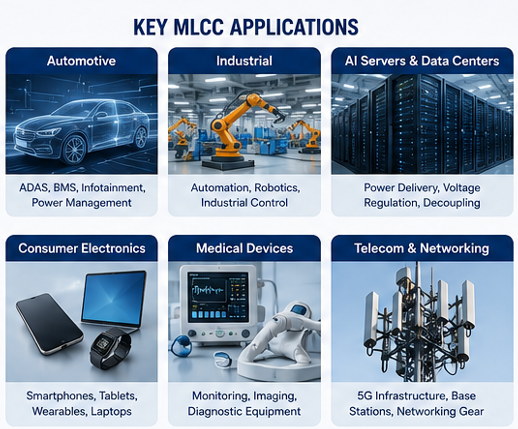
Several long-term trends continue to reshape global demand:
AI Infrastructure
The rapid expansion of AI servers and data centers is increasing demand for high-reliability capacitors used in power management and high-speed computing.
Automotive Electronics
Modern electric vehicles require significantly more MLCCs than traditional vehicles due to advanced driver assistance systems (ADAS), battery management systems (BMS), infotainment, and onboard power electronics.
Industrial Automation
Factories continue investing in automation, robotics, PLC systems, and industrial IoT, creating stable long-term demand for industrial-grade passive components.
Medical Equipment
Medical electronics require highly reliable MLCCs with strict quality standards, driving demand for manufacturers known for long-term consistency.
Although manufacturing capacity has expanded in recent years, procurement challenges remain. Popular part numbers can still experience sudden lead-time fluctuations during periods of strong demand, while pricing and inventory may change more rapidly than many buyers expect.
For purchasing teams, maintaining supply stability has become just as important as obtaining competitive pricing.
Major Global MLCC Manufacturers
Rather than asking “Which manufacturer is the best?”, buyers should ask “Which manufacturer is the most suitable for this application?”
Each supplier has different strengths depending on performance requirements, production volume, certification needs, and cost targets.
| Application | Recommended Suppliers |
|---|---|
| AI Servers & Data Centers | Murata, Samsung Electro-Mechanics, TDK |
| Automotive Electronics | Murata, TDK, Taiyo Yuden |
| Industrial Automation | Yageo, Kyocera, Walsin |
| Consumer Electronics | Yageo, Walsin, Fenghua |
| Telecommunications Equipment | Murata, TDK, Taiyo Yuden |
| RF & Microwave Applications | Dalicap, Murata |
| Aerospace & Defense | Torch Electron, Hongyuan Electronics |
| Cost-Sensitive Projects | Fenghua, Walsin, Yageo |
| China Localization Projects | Three-Circle, Fenghua, Torch Electron |
Rather than limiting sourcing to a single manufacturer, many OEMs and EMS providers adopt multi-source strategies to improve supply resilience and reduce procurement risks.
How Buyers Evaluate Suppliers
Selecting an MLCC supplier involves much more than comparing quotations.
Professional purchasing teams typically evaluate suppliers across several critical dimensions.
Product Authenticity
Reliable suppliers should be able to provide traceability and demonstrate clear sourcing channels. Authentic components help reduce quality risks and avoid costly production issues.
Inventory Stability
A low quotation has limited value if inventory cannot support production schedules. Buyers should evaluate not only current stock but also the supplier’s ability to maintain stable supply over time.
Lead Time
Consistent delivery often matters more than the lowest unit price. Unexpected lead-time changes can disrupt production planning and increase operational costs.
Date Code
Many manufacturers and OEMs have internal requirements regarding component manufacturing dates. Confirming acceptable date codes before purchasing helps prevent unnecessary delays.
Packaging Options
Procurement teams should verify packaging requirements in advance, including:
- Full Reel
- Cut Tape
- Tray
- Tube
Proper packaging minimizes handling risks and supports efficient production.
Technical Support
When shortages occur, experienced suppliers can often recommend qualified alternatives or compatible options, helping buyers maintain production continuity.
Communication & Responsiveness
Fast and transparent communication becomes especially valuable when inventory changes quickly. Timely updates enable buyers to make informed decisions before market conditions shift.
Why the Lowest Price Can Cost More
Every purchasing department aims to control costs. However, focusing solely on the lowest quotation can introduce risks that outweigh the initial savings.
For example, a lower-priced offer may involve older date codes, limited traceability, incomplete packaging, or uncertain inventory availability. In some cases, delivery delays can lead to production interruptions, expedited shipping costs, or additional sourcing efforts that ultimately increase the total procurement cost.
Instead of evaluating suppliers based only on unit price, experienced buyers often consider the total cost of ownership, including supply reliability, product authenticity, lead-time stability, communication efficiency, and after-sales support.
A supplier who consistently delivers authentic components on time and responds quickly to changing requirements can often create greater long-term value than one offering the lowest initial price.
Choosing Alternatives
When Should You Consider Alternative MLCC Brands?
Alternative sourcing has become an increasingly common strategy for purchasing teams. Whether driven by long lead times, budget constraints, or supply shortages, qualified alternatives can improve supply continuity without compromising product performance.
However, selecting an alternative should never be based on price alone.
Before approving an alternative MLCC, buyers should work with their engineering team to verify several key specifications:
- Capacitance
- Rated voltage
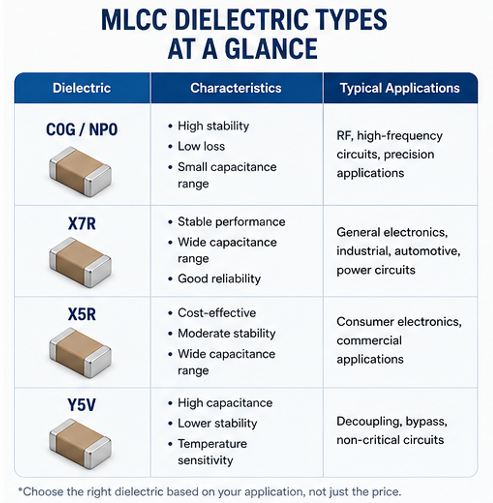
- Dielectric type (X5R, X7R, C0G, etc.)
- Package size
- Temperature characteristics
- Tolerance
- DC bias performance
- Reliability requirements
- Application environment
For mission-critical applications such as automotive, medical, aerospace, or industrial control systems, even minor differences in material characteristics may affect long-term reliability. In these cases, engineering validation and sample testing are strongly recommended before volume purchasing.
For general consumer electronics or commercial products, approved alternative manufacturers may offer shorter lead times, improved availability, or more competitive pricing while maintaining comparable performance.
Rather than relying on a single manufacturer, many OEMs and EMS companies establish qualified multi-source strategies to reduce procurement risk and improve supply flexibility.
Current Supply Chain Trends Every Buyer Should Know
The MLCC Market Is More Stable Than Before, but Procurement Risks Still Exist
Compared with previous years, the global MLCC market has become more balanced. Manufacturing capacity has expanded, and many standard part numbers are available with shorter lead times.
However, purchasing teams should remain aware of several ongoing market trends.
AI Infrastructure Continues to Drive Demand
The rapid growth of AI servers, cloud computing, and high-performance computing is increasing demand for high-reliability passive components used in power management and advanced electronics.
While this demand does not affect every MLCC category equally, it can influence the availability of certain specifications and production capacity.
Automotive Electronics Continue to Grow
Electric vehicles, battery management systems, onboard chargers, ADAS, and infotainment systems require significantly more MLCCs than conventional vehicles.
As automotive production continues to expand globally, demand for automotive-grade components remains strong.
Inventory Changes Faster Than Many Buyers Expect
Although supply conditions have improved, inventory for popular part numbers can still change rapidly due to project launches, allocation policies, or unexpected demand.
For production-critical components, buyers may benefit from confirming inventory availability before finalizing internal approvals.
Supply Stability Is Becoming More Important Than Unit Price
More companies are shifting their procurement strategy from “lowest price wins” to “lowest supply risk wins.”
Reliable delivery, authentic products, responsive communication, and consistent supplier performance increasingly influence purchasing decisions.
Practical Procurement Checklist
MLCC Procurement Checklist Before Sending an RFQ
A well-prepared RFQ helps suppliers respond faster and reduces unnecessary communication.
Before requesting a quotation, consider confirming the following information:
| Checklist | Why It Matters |
|---|---|
| Manufacturer | Prevents incorrect substitutions |
| Full Part Number | Ensures accurate quotation |
| Required Quantity | Helps evaluate pricing and stock availability |
| Target Delivery Date | Supports production planning |
| Packaging Requirement | Reel, Cut Tape, Tray or Tube |
| Preferred Date Code | Confirms acceptance criteria |
| Alternative Acceptance | Expands sourcing flexibility |
| Shipping Destination | Determines logistics options |
| Certification Requirements | Required for regulated industries |
| Special Quality Requirements | Supports inspection and traceability |
Providing complete information at the beginning of the sourcing process often results in faster quotations and more reliable supplier recommendations.
Common Mistakes Buyers Make When Purchasing MLCCs
Avoid These Common Procurement Risks
Even experienced purchasing teams occasionally encounter avoidable sourcing issues. Being aware of these common mistakes can help improve procurement efficiency and reduce supply chain risks.
Choosing Suppliers Based Only on Price
The lowest quotation does not always represent the lowest overall procurement cost. Factors such as authenticity, delivery reliability, communication efficiency, and after-sales support should also be considered.
Ignoring Lead Time
A competitive price has limited value if components cannot arrive when production requires them.
Overlooking Packaging Requirements
Receiving Cut Tape instead of Full Reel, or different packaging than expected, may affect production efficiency and inventory management.
Not Confirming Date Code Requirements
Many manufacturers and OEMs have internal policies regarding acceptable manufacturing dates. Confirming this requirement in advance helps avoid unnecessary returns or delays.
Waiting Too Long to Confirm Orders
Inventory and pricing for popular electronic components may change quickly. Delayed purchasing decisions can occasionally result in longer lead times or reduced availability.
Relying on a Single Supply Source
Developing qualified backup suppliers improves resilience and reduces operational risk during market fluctuations.
Frequently Asked Questions
Which MLCC manufacturer is the best?
There is no universal answer. The most suitable manufacturer depends on your application, quality requirements, budget, and supply strategy.
Can Samsung MLCC replace Murata?
In some applications, equivalent specifications from different manufacturers may be considered. However, all alternatives should be evaluated and approved by the engineering team before production use.
How can buyers reduce MLCC sourcing risk?
Working with reliable suppliers, confirming technical specifications, maintaining qualified alternative options, and planning purchases early all help reduce procurement risk.
Why do quotations from different suppliers vary so much?
Differences may result from inventory availability, packaging, manufacturing date, sourcing channels, delivery terms, and market conditions.
Should I always choose the lowest quotation?
Not necessarily. Procurement decisions should consider overall value, including product authenticity, delivery reliability, communication quality, and long-term supplier performance.
How can I avoid counterfeit MLCCs?
Purchase through trusted supply channels, verify product traceability where applicable, and work with suppliers who maintain clear quality control processes and transparent sourcing practices.
Is it better to use one manufacturer or multiple manufacturers?
Many companies adopt a multi-source strategy for approved components. This can improve supply resilience and reduce dependence on a single source, provided technical compatibility has been verified.
Conclusion
Smart Procurement Starts with Better Decisions
Selecting the right MLCC supplier is no longer simply a matter of choosing a well-known manufacturer or comparing the lowest quotation.
Successful purchasing teams evaluate suppliers from multiple perspectives, including supply stability, authenticity, technical support, communication efficiency, and long-term reliability. A balanced sourcing strategy helps reduce procurement risks while supporting consistent production.
As global supply chains continue to evolve, buyers who combine careful planning with flexible sourcing options are often better positioned to respond to changing market conditions and maintain business continuity.
Whether you’re sourcing for new product development, mass production, or ongoing maintenance, informed procurement decisions remain one of the most effective ways to improve both operational efficiency and long-term value.
Get Expert Support for Your Next MLCC Sourcing Project
If you’re looking for reliable support with MLCC sourcing, our team is here to help.
At 7SEtronic, we support OEMs, EMS providers, distributors, and industrial manufacturers with:
- 100% New Original electronic components
- Alternative sourcing recommendations
- Short lead-time and hard-to-find parts
- BOM cost optimization
- Global shipping and responsive support
Whether you’re comparing manufacturers, evaluating alternatives, or sourcing difficult-to-find components, we’re happy to assist.
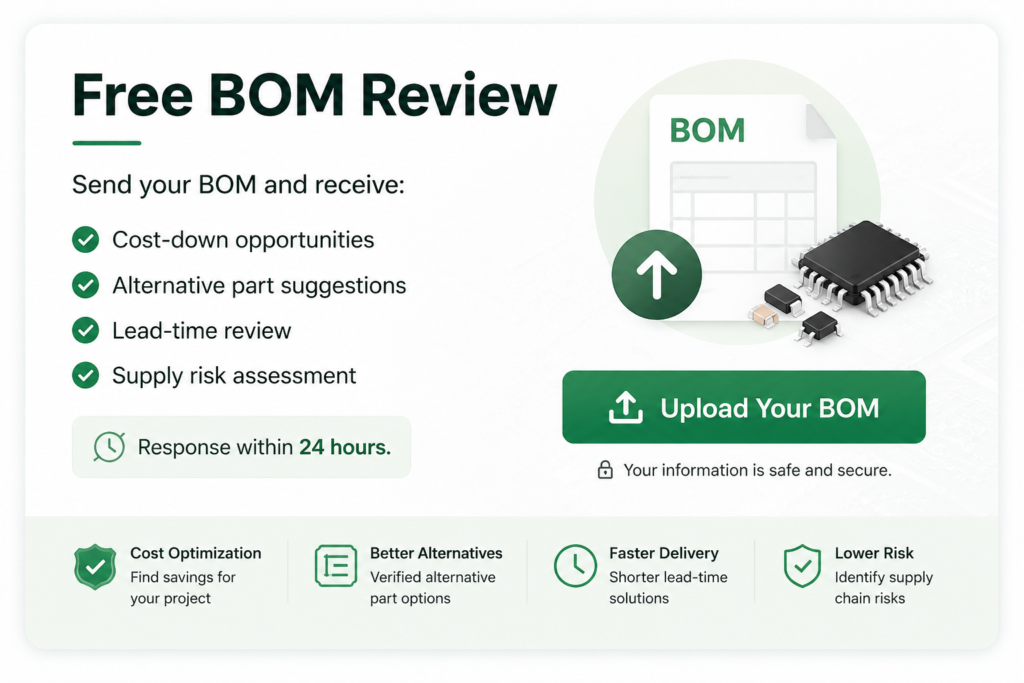
Ready to start? Upload your BOM or send us your RFQ, and we’ll provide a sourcing solution tailored to your project.
The manufacturers mentioned in this article are referenced solely for educational and sourcing comparison purposes. 7SEtronic is an independent distributor and is not affiliated with or authorized by the brands listed unless explicitly stated.
Others also view: